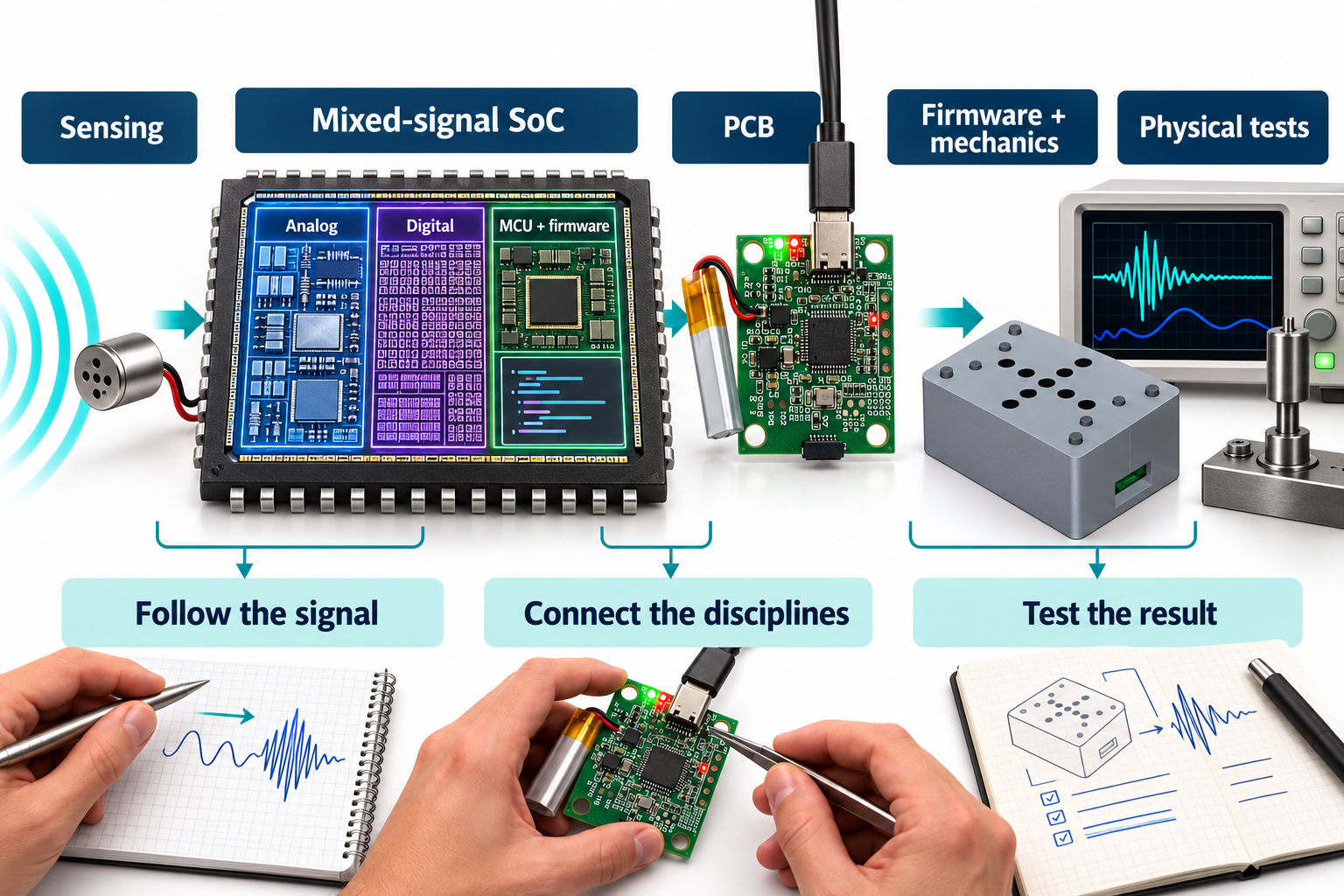
I’ve worked across the entire hardware chain.
Sensors, analog circuits, digital logic and firmware running inside the chip—then the board, mechanics and experiments around it. I understand the work on both sides of each interface.
Full engineering story
The complete narrative, original evidence and four portfolio scenes.
D0 = the day the first chip arrived.
Return to the About me summarySensors, analog circuits, digital logic and firmware running inside the chip—then the board, mechanics and experiments around it. I understand the work on both sides of each interface.
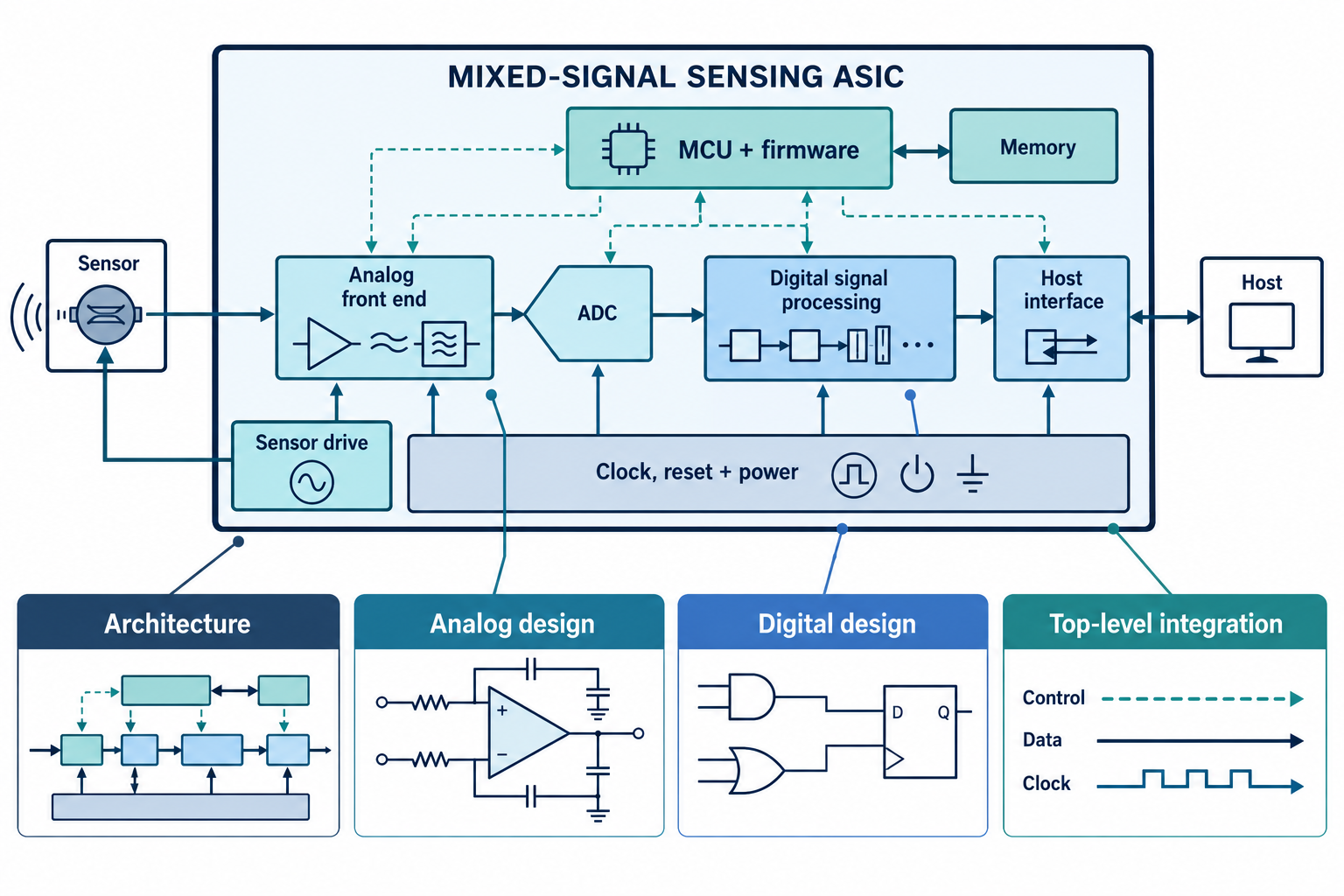
Architecture, analog circuits, digital logic, on-chip MCU + firmware and top-level integration. I understand the design decisions inside each block—and the interfaces between them.
I bring electronics, firmware and mechanical constraints into the same engineering conversation. Today, I use that experience to direct AI development across PCB design, enclosure CAD and bench testing.
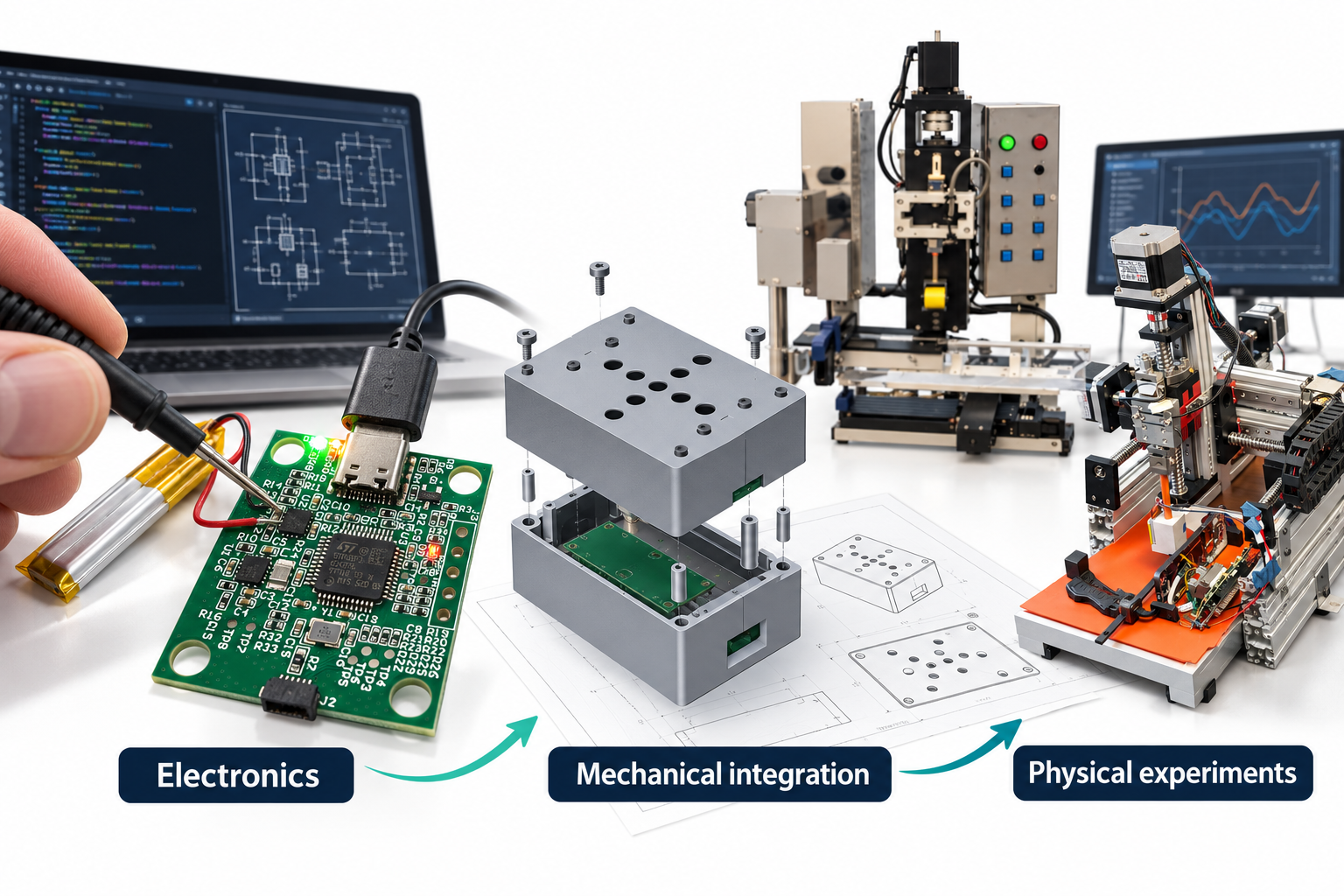
Because I’ve worked inside the chip and across the bench, I know how to turn an engineering goal into the right context, tool connections, agent tasks and acceptance checks. That is the foundation of the AI environment I deployed at UltraSense.
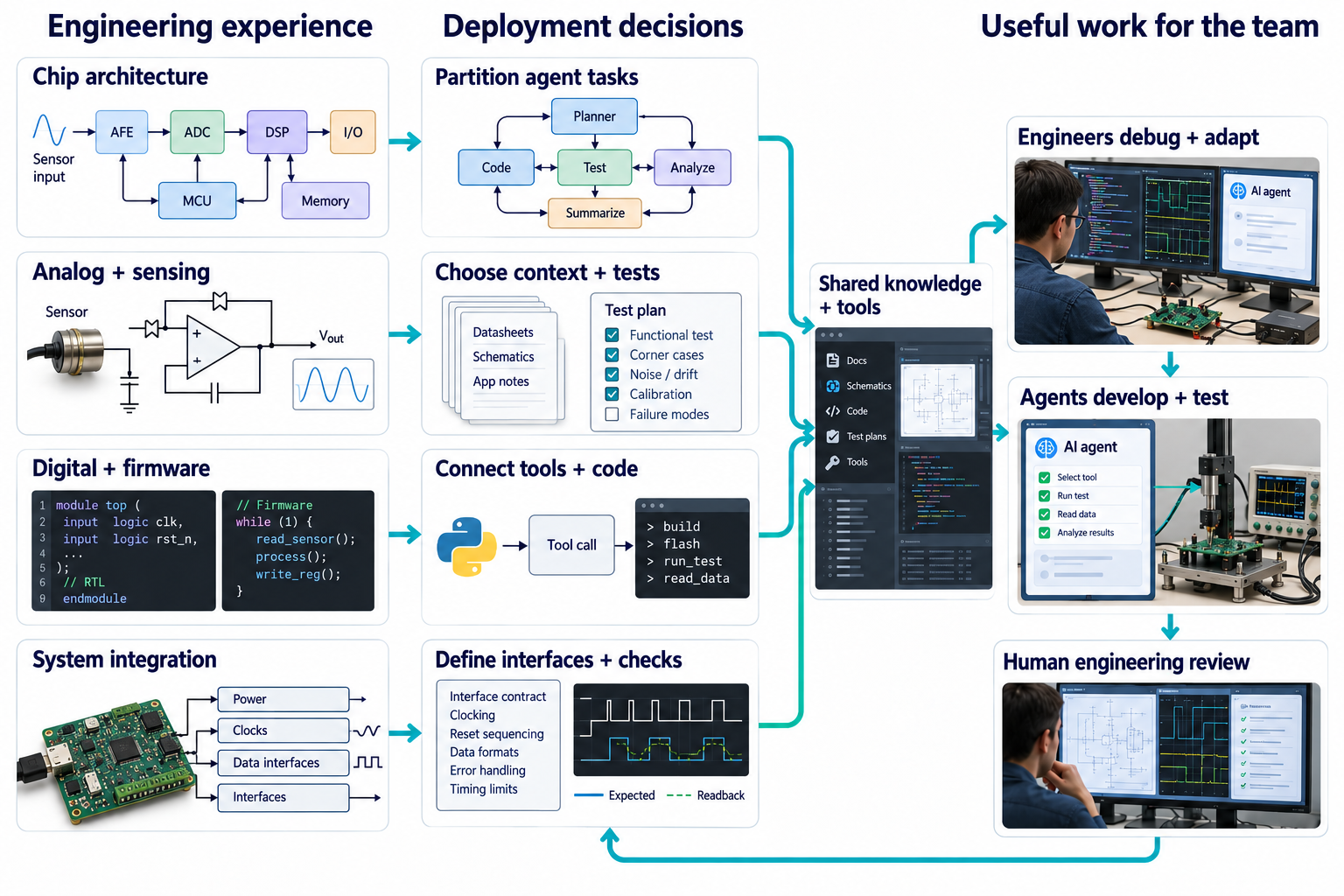
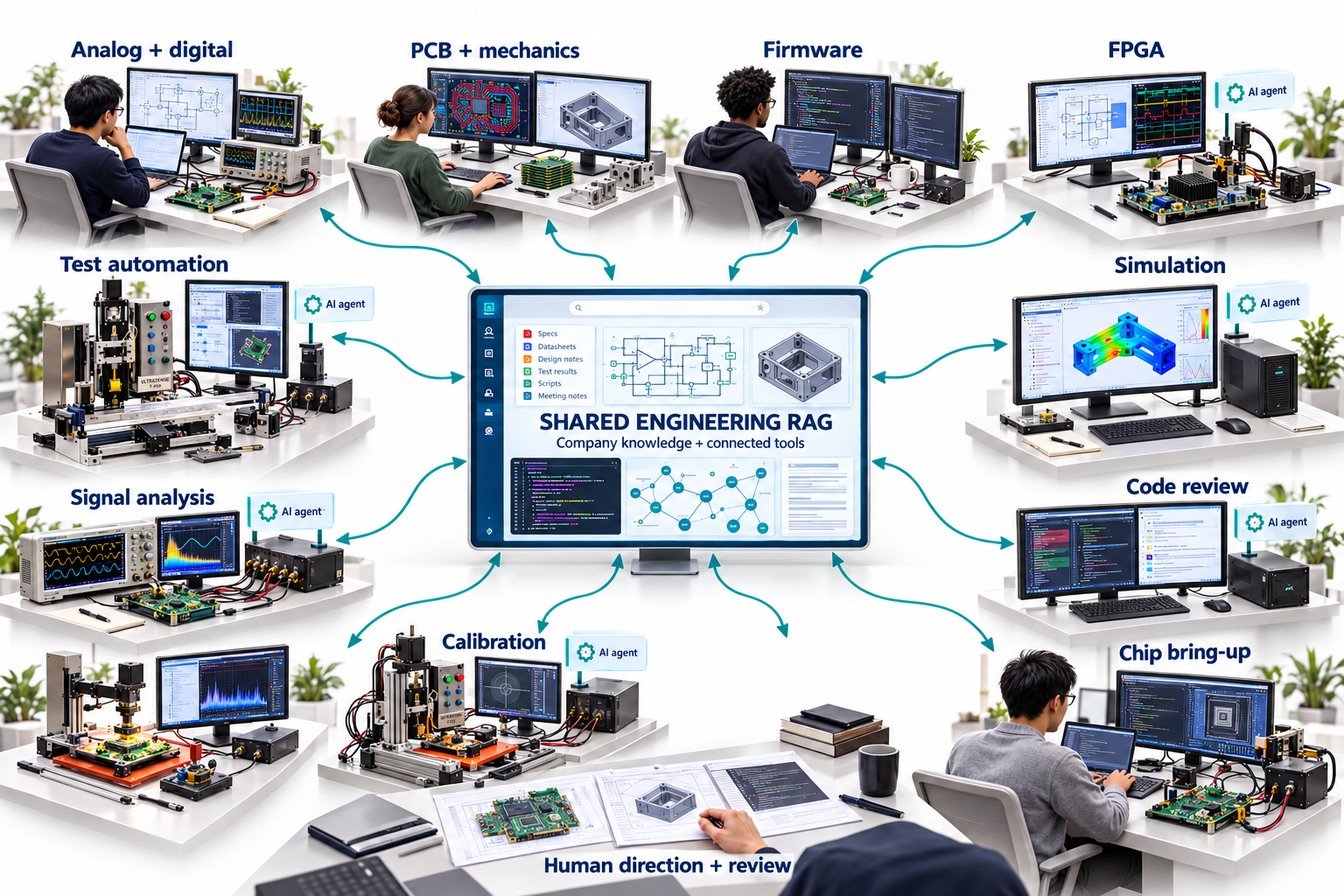
At UltraSense, I built the shared knowledge base, agent workflows and tool connections that put AI into everyday engineering. Engineers and specialist agents work across design, firmware, chip bring-up, calibration and physical tests—with common context and results the team can inspect.
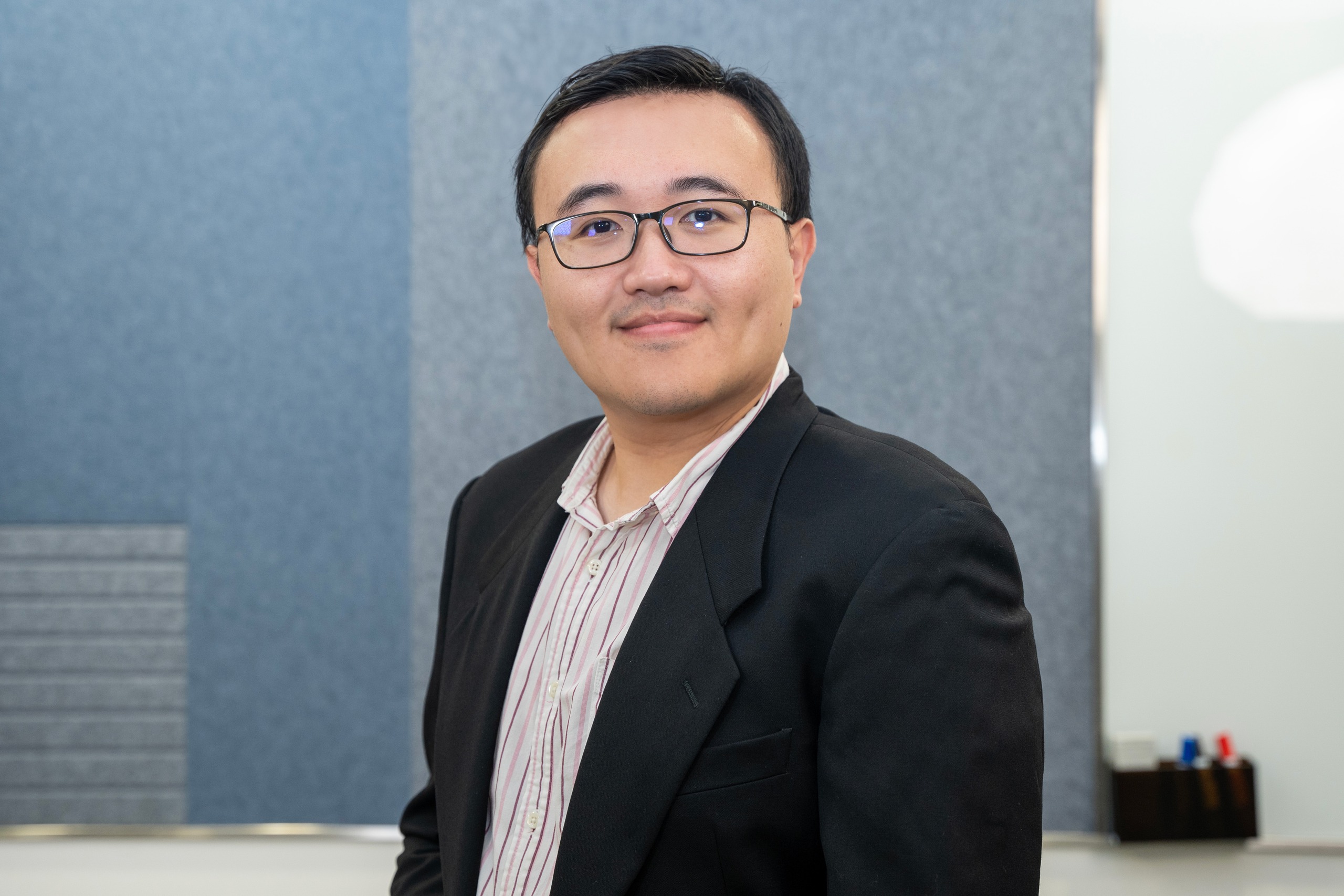
Hao-Yen Tang
Co-founder & CTO, UltraSense
Separate setups can advance separate engineering questions in parallel.
At UltraSense, I built and integrated an AI engineering environment that connects company knowledge, development tools and hardware experiments. That foundation now supports algorithm development across multiple physical setups.
My work spans sensing, chips, firmware and physical testing. I set the engineering direction and make the tradeoffs; AI agents implement, measure and compare the next options.
Berkeley PhD · First-author ISSCC paper awarded the Lewis Winner Award
THE LATEST CHAPTER
Once the knowledge and tools were connected, I could carry an engineering question into more than one setup. One track worked on force sensing with an automated press rig. Another worked on ultrasonic measurements, filtering and firmware.
I choose the questions, prepare the physical setup and decide which tradeoffs matter. AI agents develop candidates, run supported tests and compare results. That keeps several lines of investigation moving, with each experiment shaping the next round.
See parallel development in practice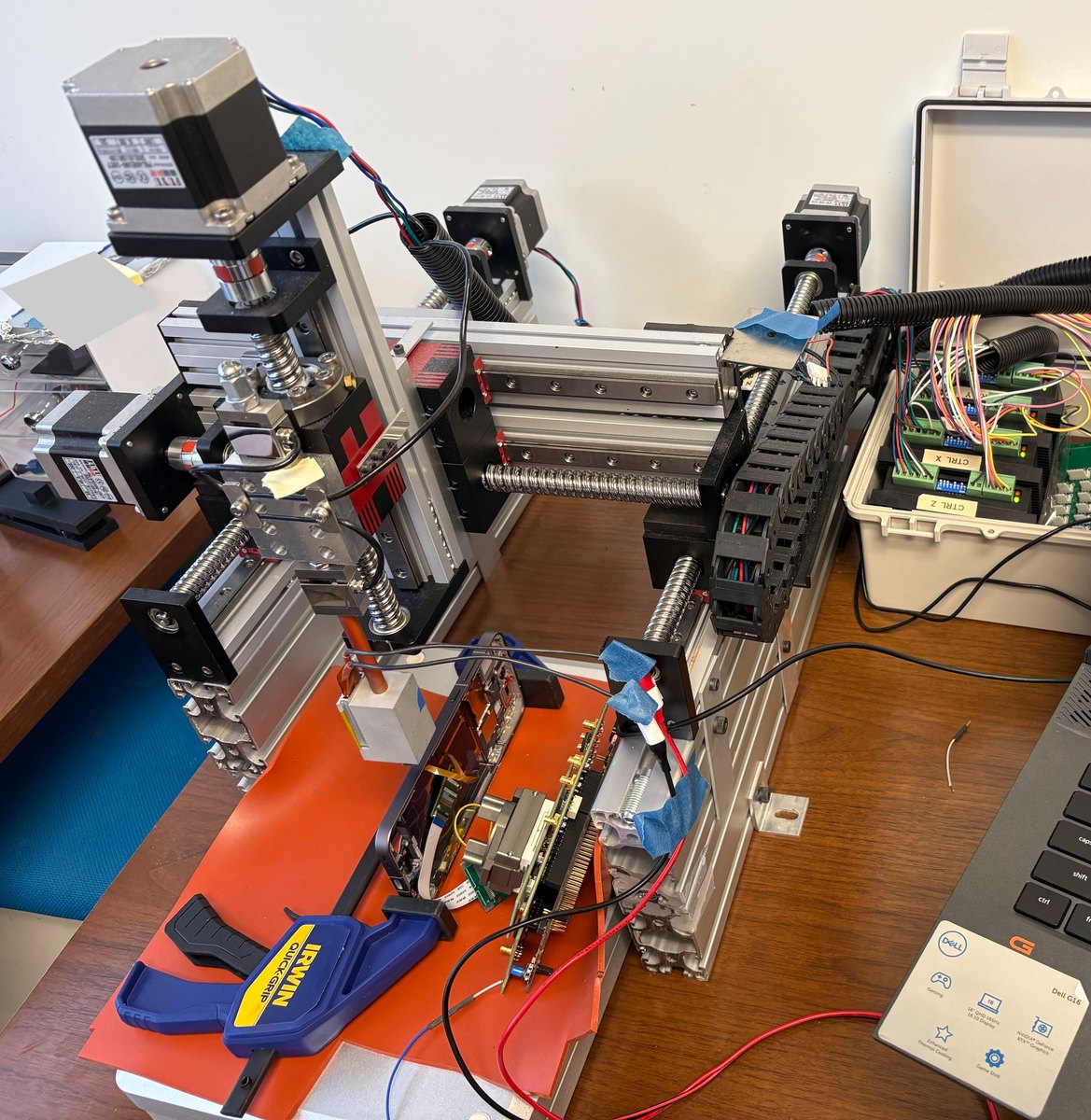
Setup A / Force sensing
Firmware iteration and repeatable press campaigns
Results guide the next candidate
Setup B / Ultrasonic sensing
Filter research followed by firmware integration
Results guide the next candidate
Engineering workflow across the two development tracks. Engineers set objectives, prepare hardware and choose tradeoffs.
Independent physical setups keep multiple engineering loops moving.
Automated campaigns continue through configured test conditions between engineering decisions, so the next workday starts with fresh measurements and comparisons.
Prioritize stable force output and normal press detection, then evaluate slow presses and long holds against those goals.
Use the measured reference force to distinguish a light-press delivery problem from an algorithm problem.
Check candidates in software, test them on the chip and keep a path back to the previous firmware.
“Introducing AI lowered the difficulty of these workflows enough for us to contribute.”
話說能引入 AI 把這些 flow 的難度降低到我們也能幫忙
Engineers bring years of knowledge about circuits, sensors and tests. A useful AI environment gives them a more direct way to act on that knowledge, including work that crosses into software and tooling.
Scenes from the team’s feedback. Open a scene to enlarge it, or read the original exchange.
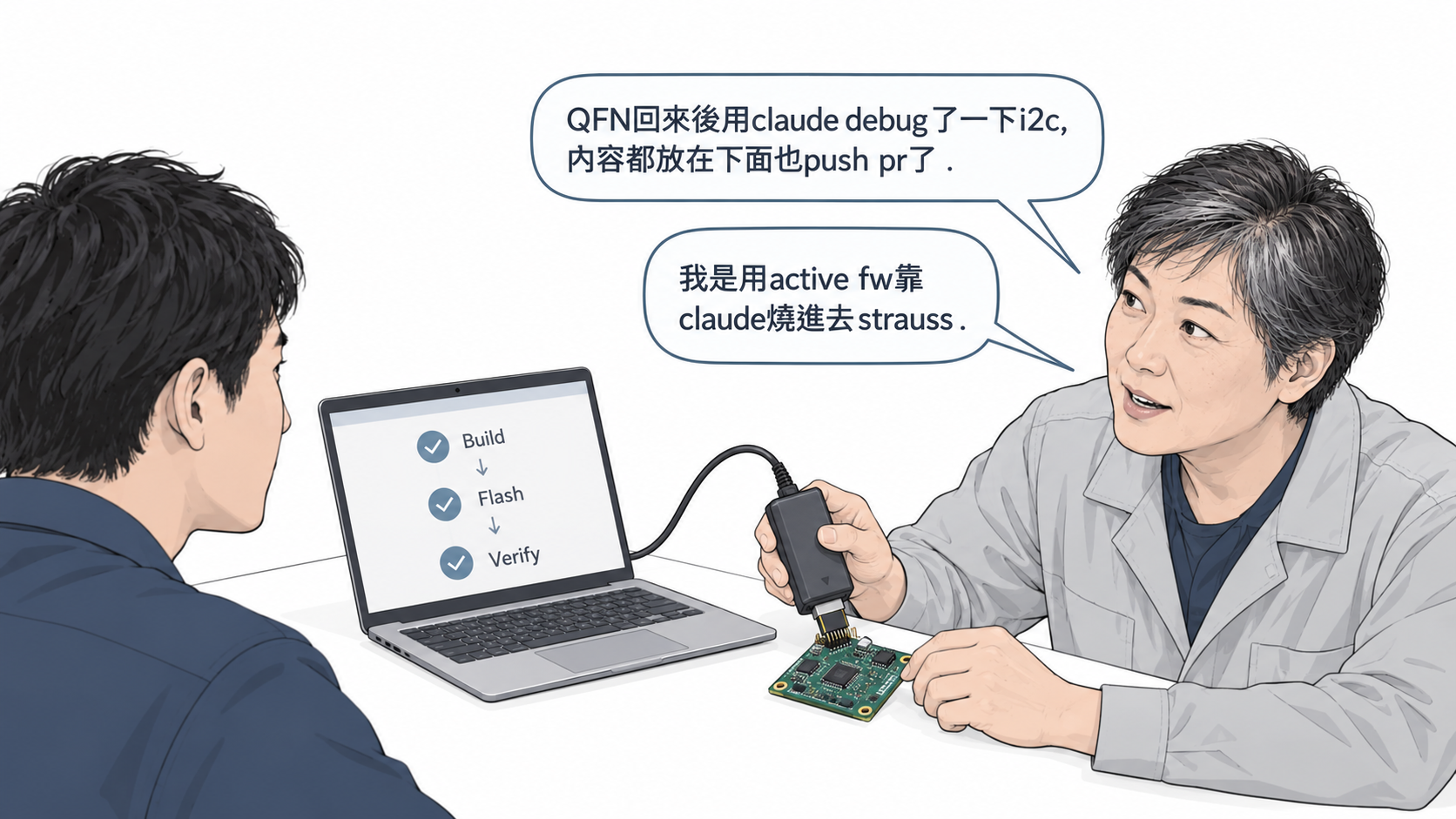
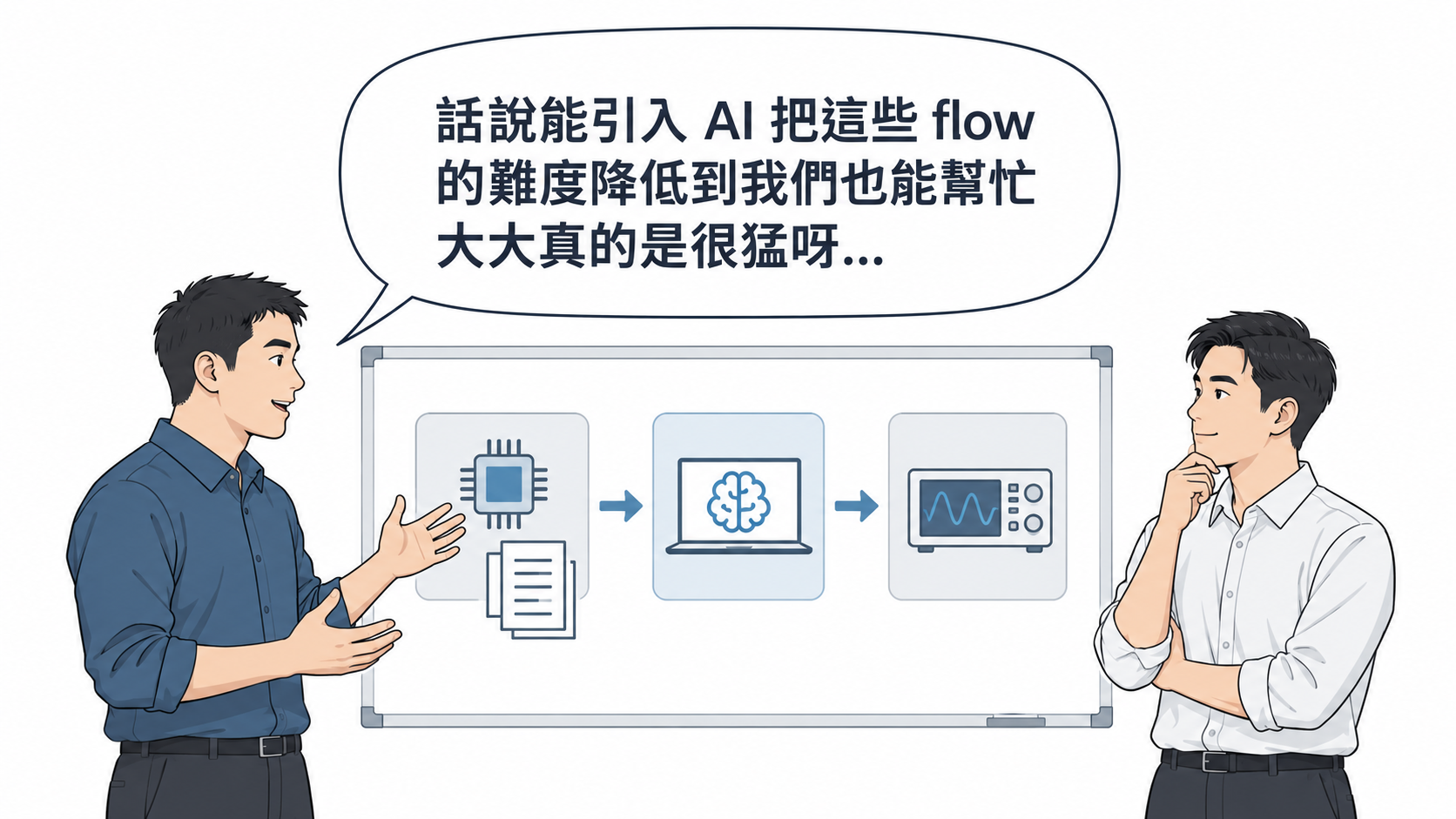
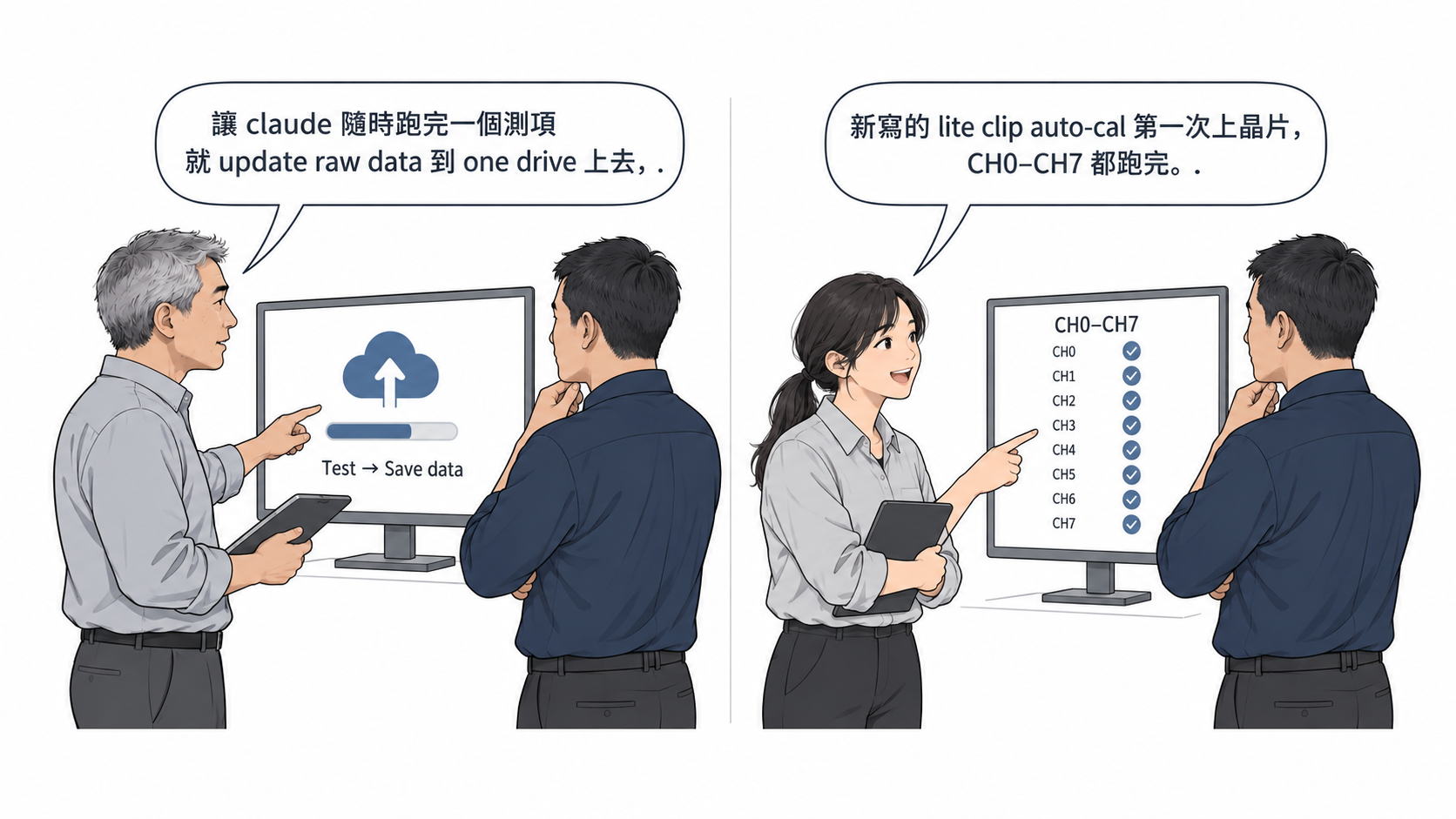
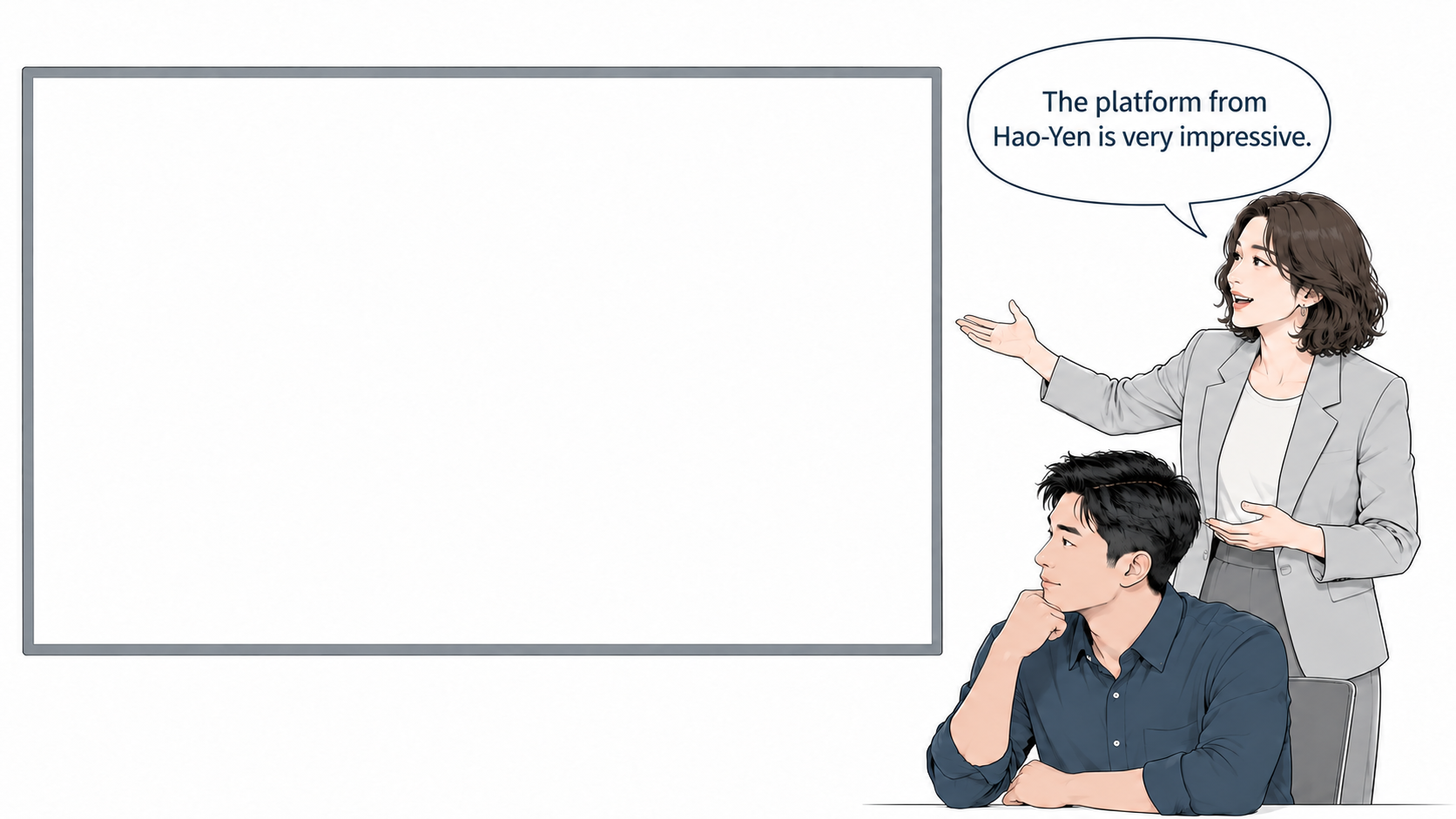
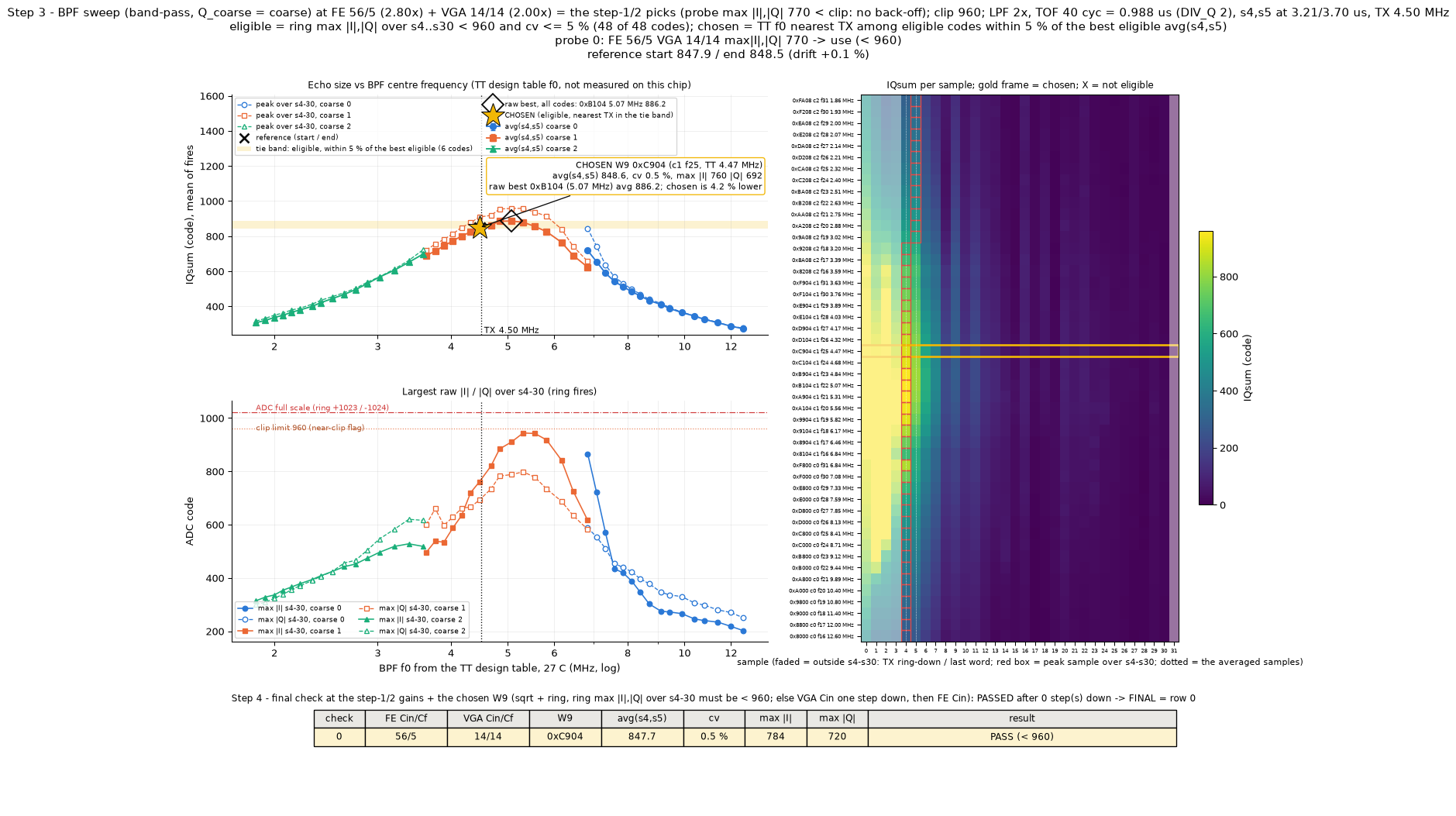
Original messages, translations and test context are available with each exchange.
01 / The judgment behind the tools
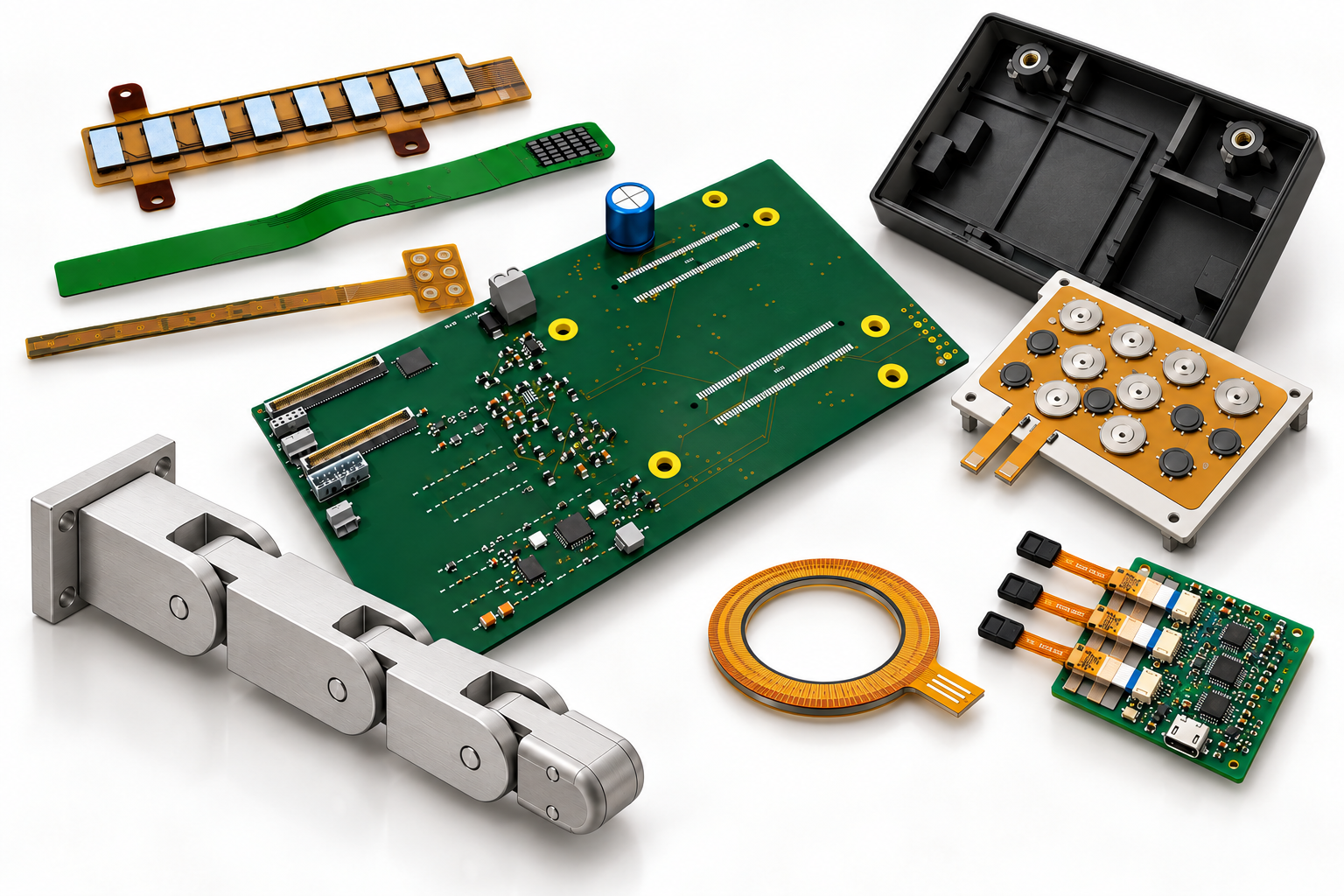
My hands-on work spans ASIC architecture and circuit design, sensors, firmware and software, electronics, mechanical integration and customer support. It began with low-voltage energy-harvesting circuits, grew into ultrasonic sensing and imaging at Berkeley, and continued through product work at TDK-InvenSense and UltraSense.
Working across those boundaries taught me to follow a problem through the whole system. In a past touch-sensing analysis, some intentional presses and false triggers looked the same in the available data. The next step was to evaluate signal history and additional sensing information. The sensor, acquisition circuit, firmware and algorithm all shaped what we could learn.
I bring those dependencies into the work I give AI: the hardware state, what each data value means, the timing that matters and the evidence needed to check a change. Years of building and debugging hardware help me turn an engineering intention into a task that software can carry out.
That experience also shaped the environment I built. I connected chip knowledge to code, prepared firmware and tools in emulation before silicon arrived, and connected the software to the bench. Colleagues can turn their expertise into executable changes, then inspect the result on real hardware.
02 / What I built
I used AI as my implementation partner to build and integrate the core environment. Each connection follows a lesson from hands-on hardware work.
What hardware work taught meDevice state, timing and the signal path give each register value its engineering meaning.
What I built or connectedConnect chip knowledge with firmware, software and the operating tools used to act on it.
What an engineer can doGive AI a precise change to make and the context needed to check it.
What hardware work taught meFirmware and host tools can be prepared while the team waits for silicon.
What I built or connectedBuild an emulation environment to exercise firmware and related software interfaces.
What an engineer can doRun and inspect software workflows before chip delivery, then continue at the bench.
What hardware work taught meA code change needs to agree with the signals and physical behavior measured on hardware.
What I built or connectedConnect firmware, Python APIs, GUIs and bench interfaces to the test workflow.
What an engineer can doRun an experiment, inspect the data and retain the useful tools for the next test.
Engineering judgment, core environment and integration.
Code, tools, analysis and working records.
Hardware operation, experiments, tool changes and interpretation.
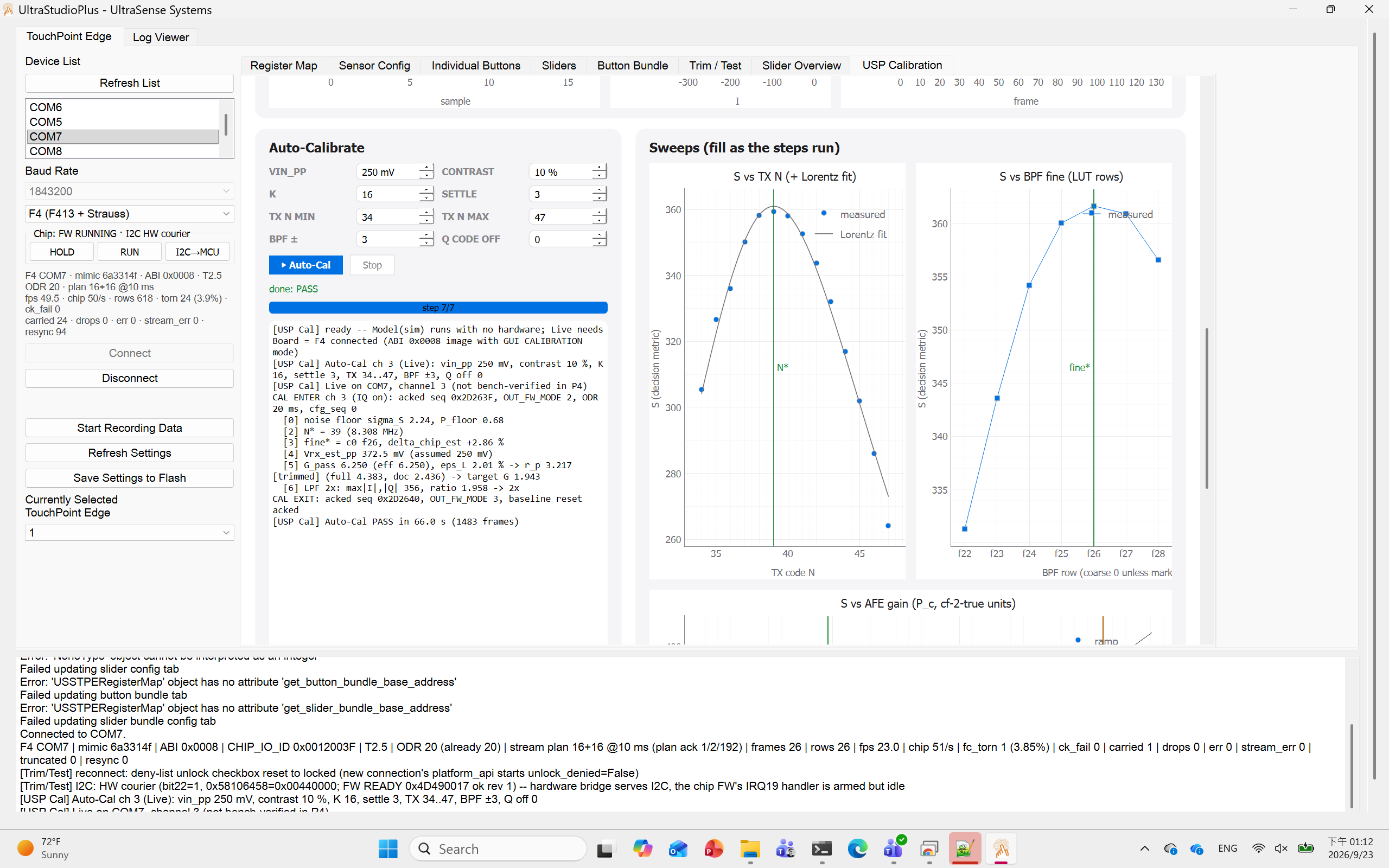
03 / From preparation to arrival-day bring-up
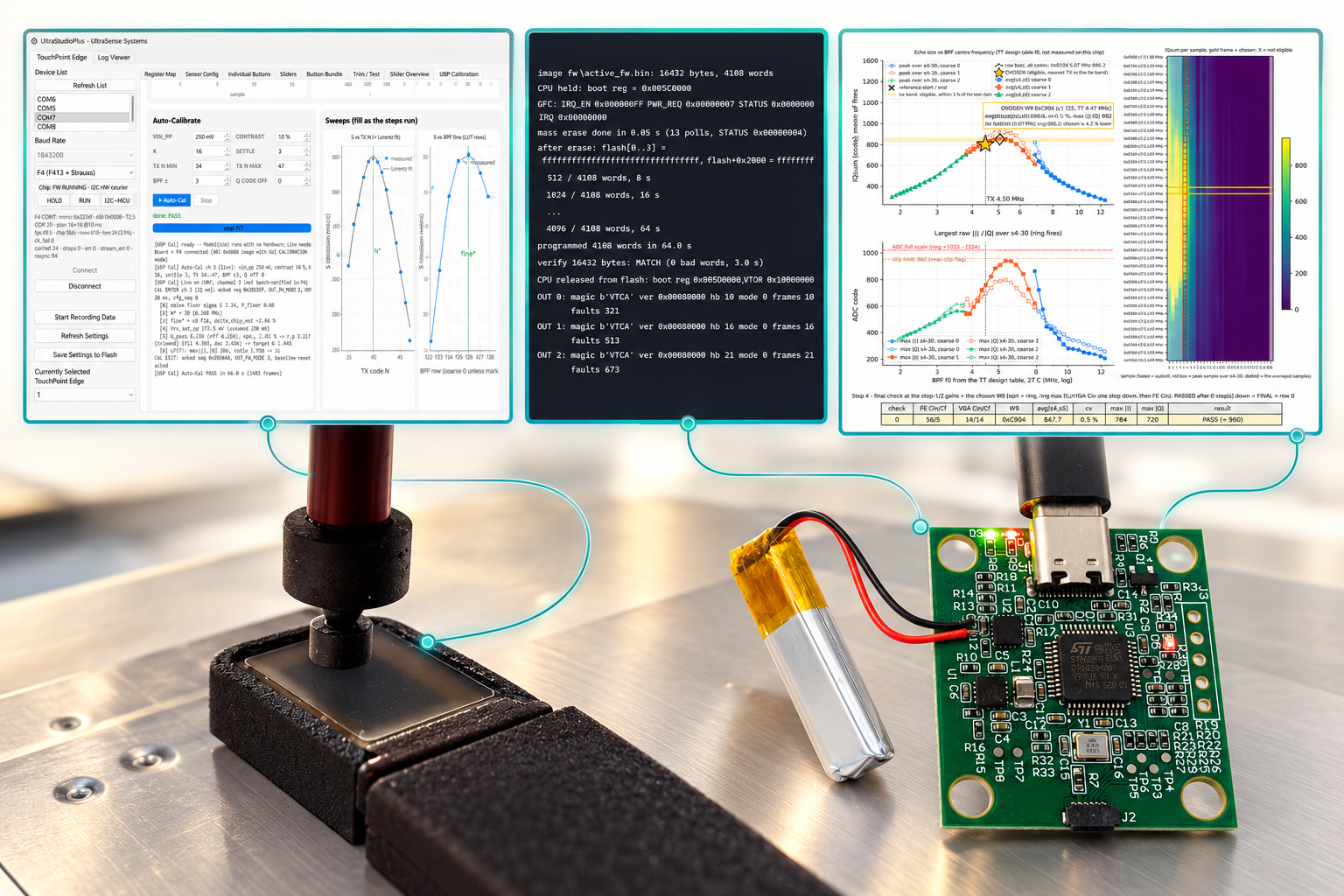
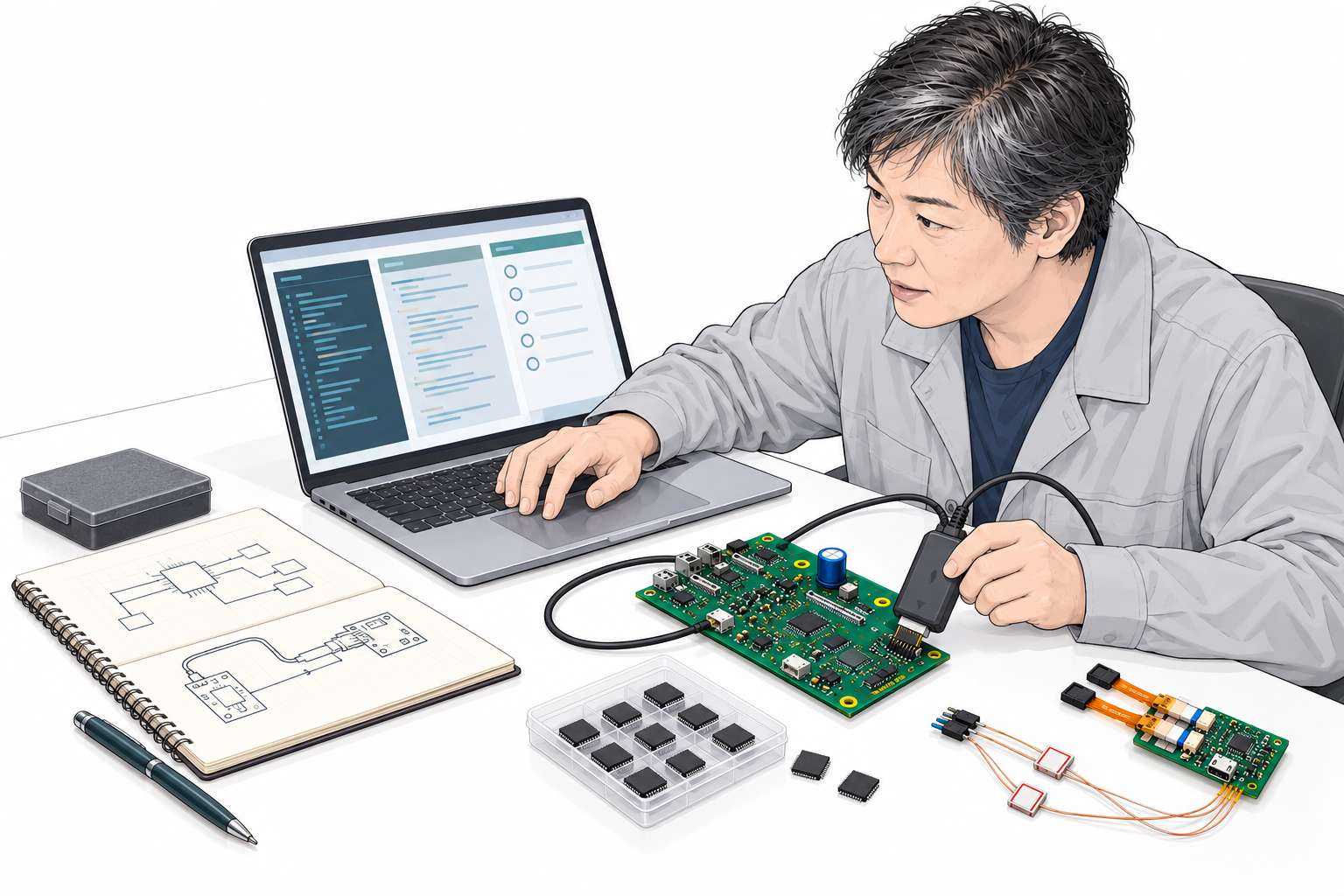
Before the new chips arrived, I used AI to prepare firmware, software tools and an emulation environment. When silicon reached the bench, an analog designer could use those tools to investigate communication, change code and load firmware.
D-7 · Before silicon
The D-7 emulation session exercised a calibration workflow through the software interfaces. It gave us a way to run and inspect the software before connecting it to physical silicon.
D0 · At the bench
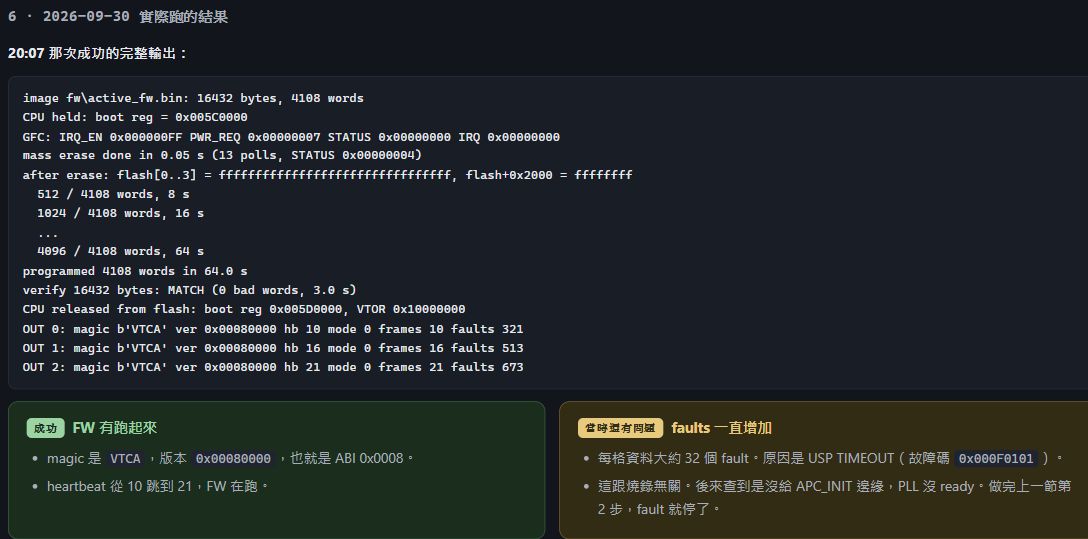
When the QFN chips arrived, an analog designer used Claude and the prepared bench tools to investigate an I²C problem. He submitted a firmware code change and reported programming active firmware into the device.
What carried into real work
The prepared environment gave the designer a direct path from a communication problem to debugging, a firmware change and programming the device. The recorded output shows firmware readback and an advancing heartbeat. His hardware knowledge guided the work; the tools gave him a way to act on it.
This is the change I want to leave with a team: engineers can turn their judgment into executable experiments, check what happens on hardware and give the next person a useful starting point.
04 / Capability that keeps growing
D+13 / Tool ownership
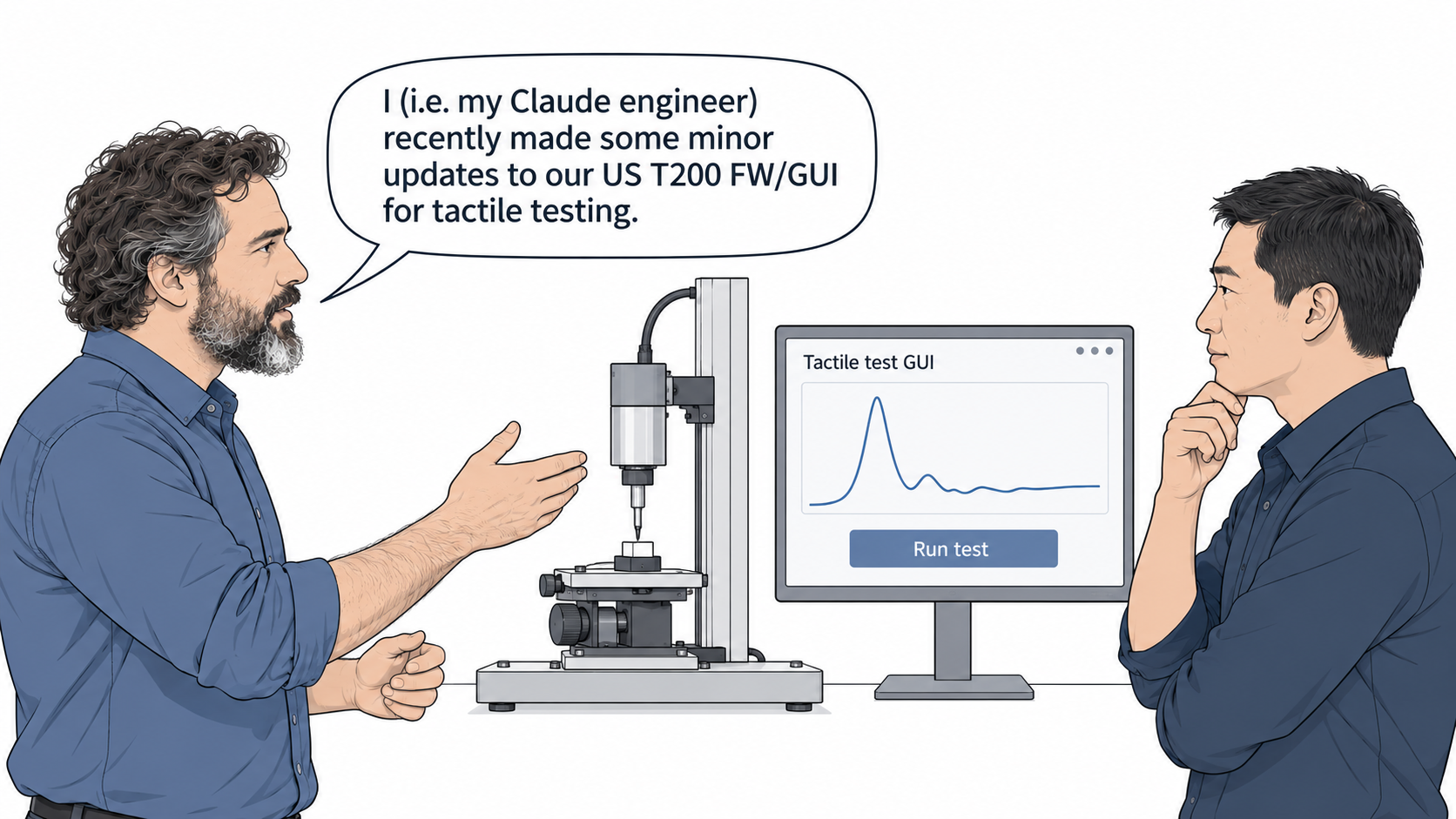
On D+13, another colleague reported using his own Claude environment to make small updates to the sensor module firmware and its GUI for tactile testing. He kept that environment available for future changes.
His experiment could shape the tools around it. Keeping the environment available also gave him a starting point for the next change.
Tool adaptation · workflow
D+14 to D+15 (2 days) / Repeated experiments
A calibration workflow offered another practical improvement. The team reported that much of the time per point was spent waiting on the serial connection. Keeping it open reduced the reported time from 5.7 to 1.84 seconds per point—about 3.1× faster for that workflow.
A D+15 follow-up reported 4,600 points with zero errors. The change shows how tools can improve as engineers learn where an experiment spends its time.
Time per calibration point
The calibration workflow reduces test time per point from 5.7 to 1.84 seconds.
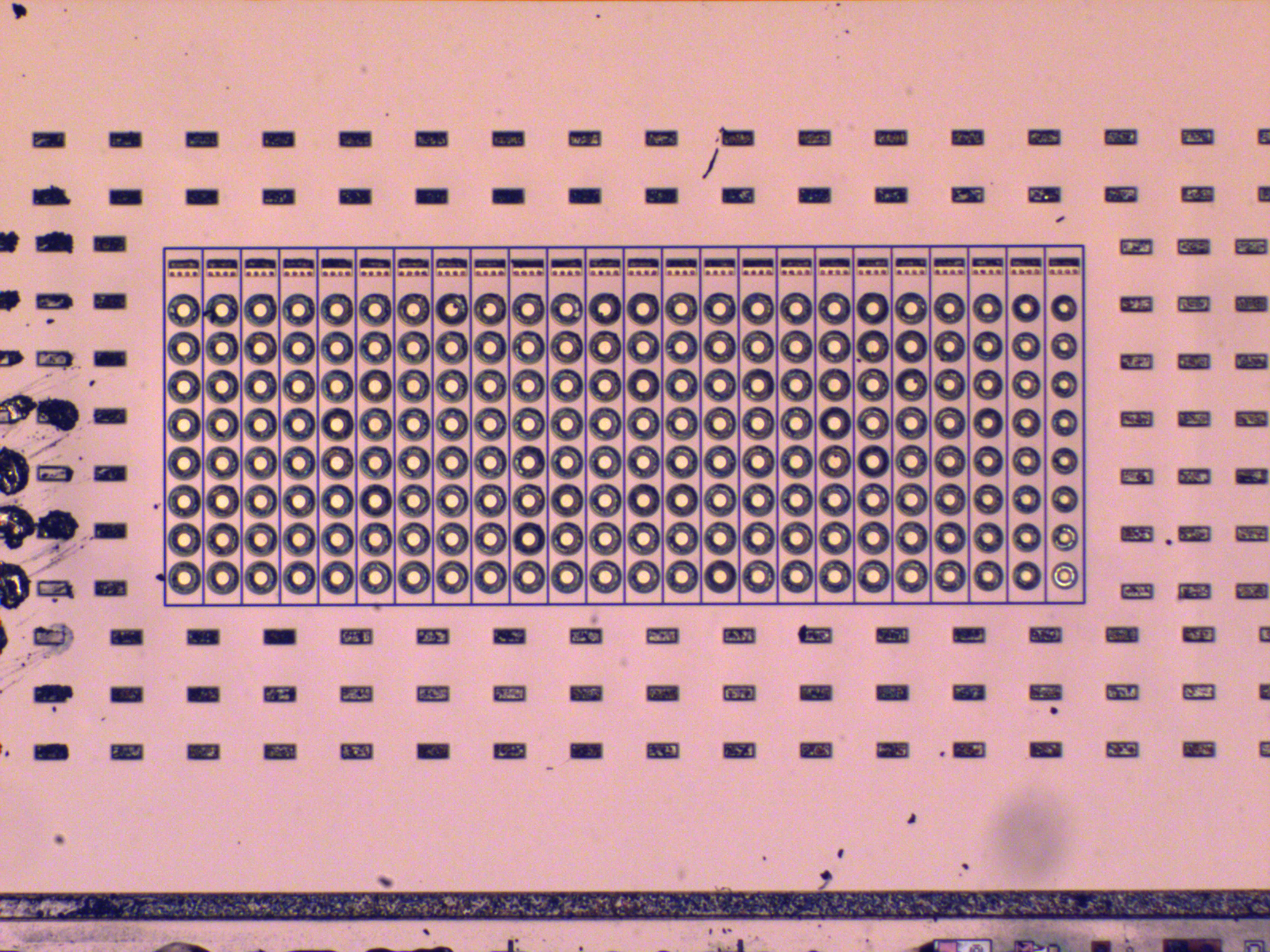
05 / The technical record
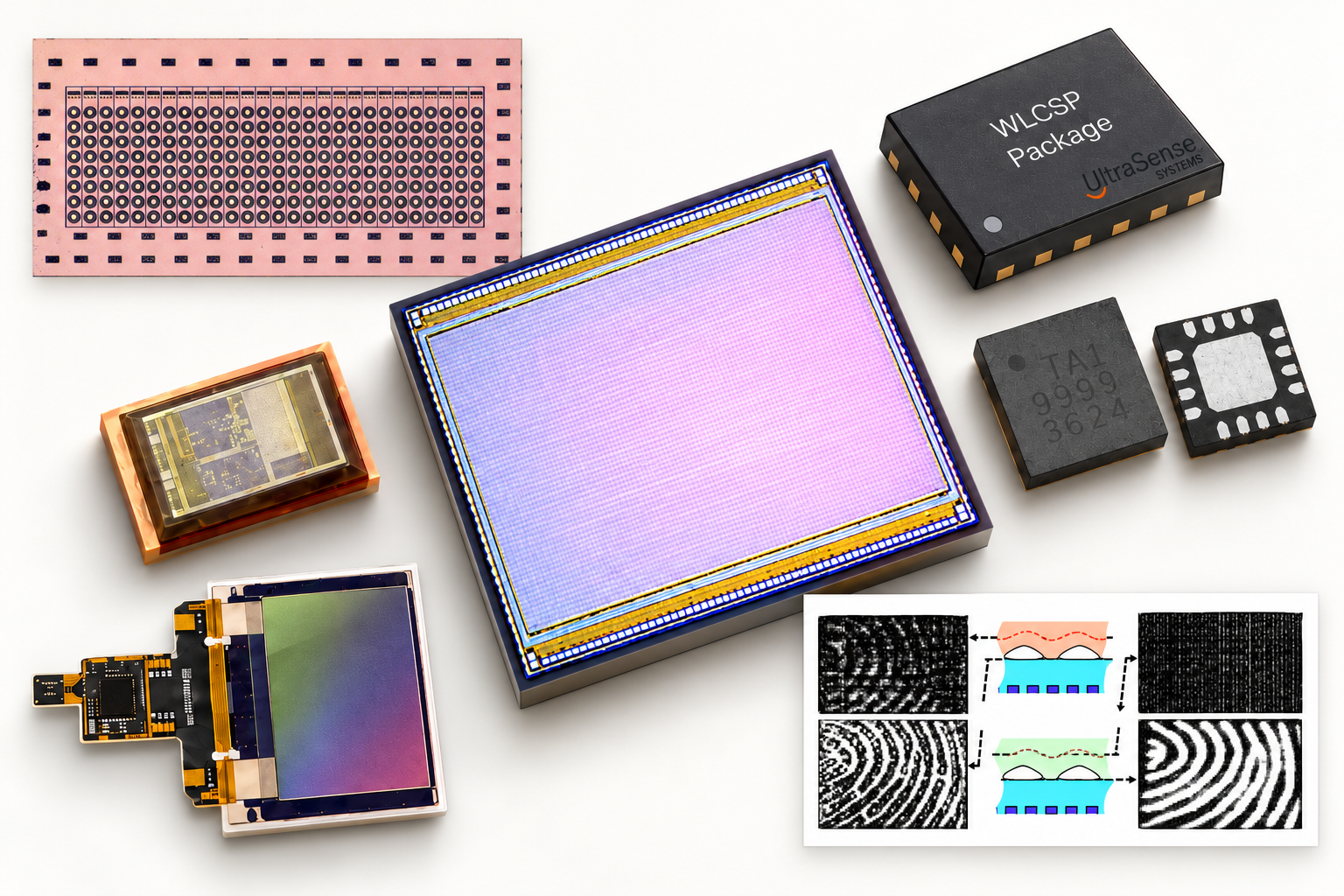
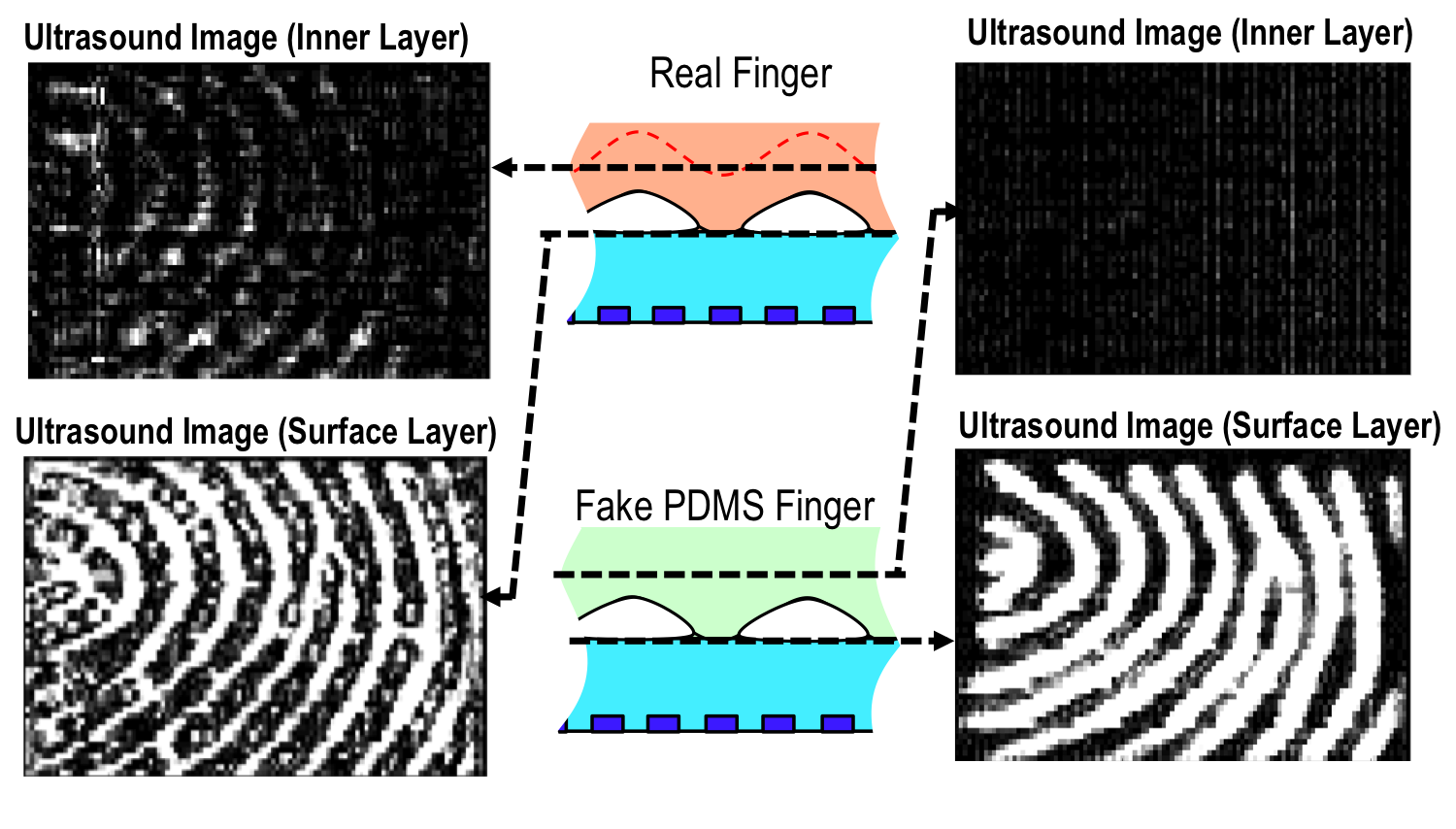
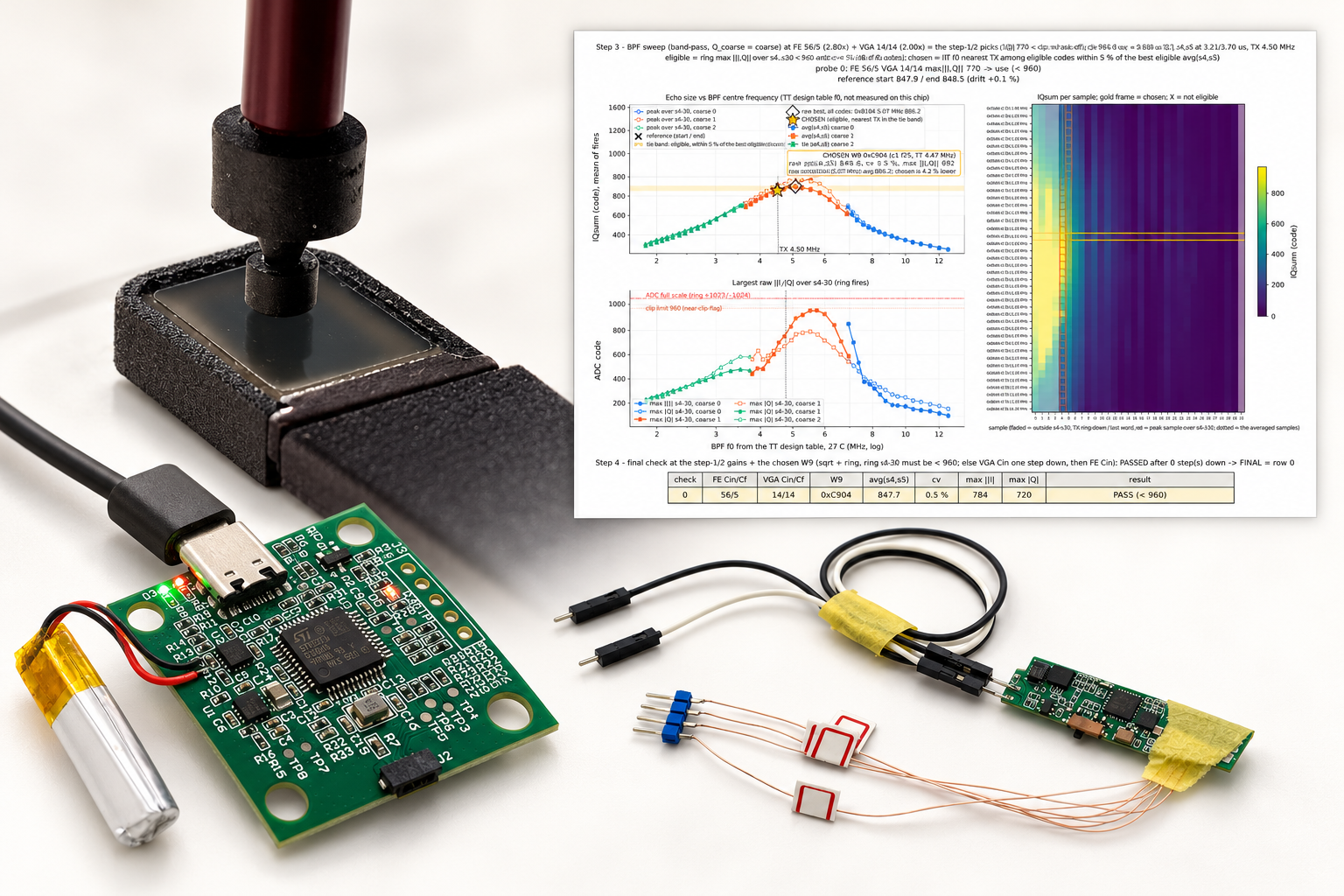
At Berkeley, I worked across ultrasonic transducers, interface circuits and imaging. My first-author fingerprint-sensor paper received the ISSCC Lewis Winner Award for Outstanding Paper. At TDK-InvenSense and UltraSense, that work extended into hardware products and customer support. This is the foundation I bring to AI implementation: following a problem across layers and checking whether code, signals and physical behavior agree.
Original figures, chip designs, publications and a full career record.
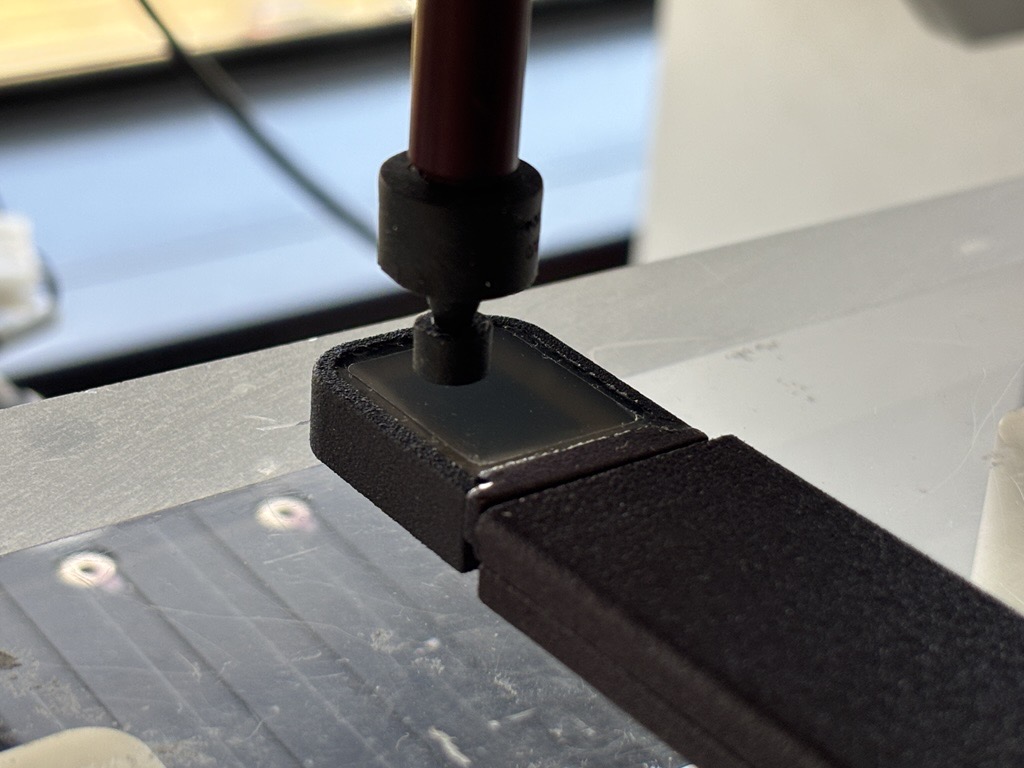
A finger presses touch icons on a metal-surface console bar. The indicators change state as the controls are pressed.
Work with me / Ponchi AI
Through Ponchi AI, I bring hardware experience and practical AI implementation to engineering teams. A useful starting point is one workflow that matters to the product: preparing for bring-up, adapting a test, analyzing measurements or helping an engineer change the tools around an experiment.
I work from your existing knowledge, code, tools and hardware constraints, build the connections the task needs, and check the result in real work. The aim is to leave your team with working tools, understandable procedures and enough context to keep improving them.
Deploy our product knowledge base, agent fleet and parallel engineering workflows in your company. Or bring us the hardware brief.