Back to my story

AI at work, from the code to the bench.

I built the core engineering environment with AI. Here are the tools colleagues used, the work they carried out, and the measurements and feedback behind the results.

What changed for engineers

  • Analog designers joined the bring-up work on day one.

    When the chips arrived, colleagues used Claude and prepared tools to debug I²C communication and program active firmware.

    See the bring-up work

  • An engineer adapted the firmware and GUI for tactile testing.

    A colleague used his own Claude environment to modify the tools for his experiment, then kept the setup for future work.

    See how the tools were adapted

  • Less waiting between calibration points.

    Keeping the serial connection open reduced time per point from 5.7 to 1.84 seconds—about 3.1× faster for this workflow. A follow-up report recorded 4,600 points with zero errors.

    Measured for this calibration workflow in the reported bench run.

    See the timing and test scope

The infrastructure I built with AI

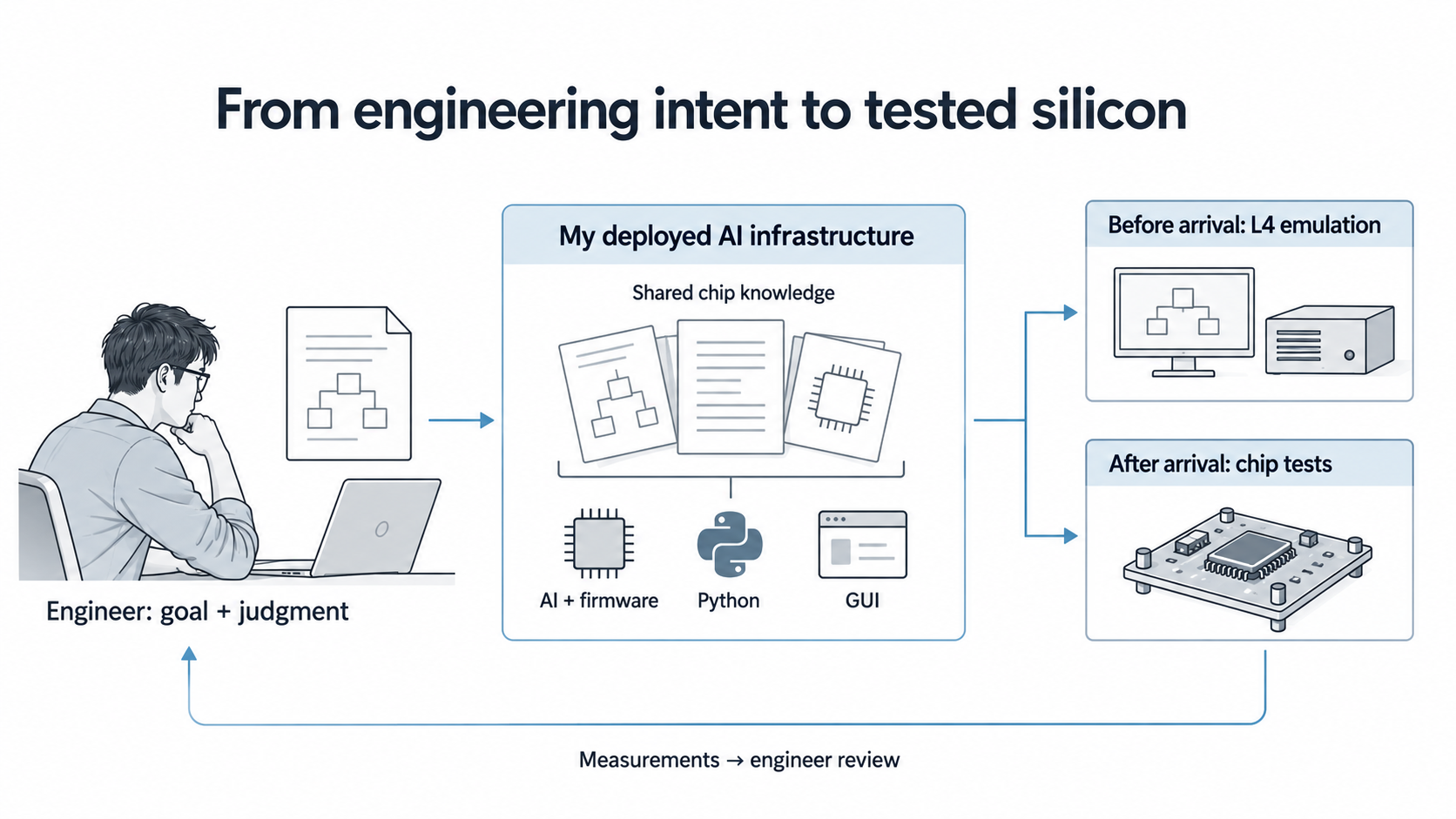
Shared chip knowledge gives the agent context. Connected firmware, APIs and bench tools let it act. Engineers use the same environment to rehearse before silicon arrives and test the physical chip afterward.

AI-generated architecture illustration: engineering intent and shared chip knowledge feed a reusable firmware, Python and GUI toolchain, connected to pre-silicon emulation and real-chip tests, with measurements returned to the engineer.
AI-generated architecture illustration · Open full size ↗
  1. Describe the experiment

    The engineer supplies the goal, hardware setup and acceptance criteria.

  2. Read the chip context

    The agent retrieves chip facts and register knowledge from the shared KB.

  3. Build and operate the tools

    Use chip firmware, F4 bench firmware, Python APIs and GUIs. Rehearse against the L4 mimic before silicon arrives.

  4. Run on the chip

    Flash firmware, read registers, collect measurements and run sweeps through the bench interfaces.

  5. Review and reuse

    Review the results and retain the code, tests and handover notes for the next experiment.

The engineer
Engineers define the experiment, connect the board and judge the result.

The AI workflow
AI writes code, operates the connected tools, analyzes data and records the work.

I build and maintain the infrastructure with AI. Engineers define the experiment, set up the hardware and judge the results. The software tools are ready when they need them.

Four examples of the infrastructure at work

Strauss silicon · September–October 2026

Prepare the software before silicon arrives

The goal
Exercise the firmware and test tools before the physical chip is available.
How AI helped
I used AI to build the L4 mimic, which hosts real chip firmware. This let us exercise the F4 bench firmware, Python APIs, GUI and SRAM interface ahead of delivery.
The result
The September 23 GUI capture shows an emulation run completing auto-cal in 66.0 seconds over 1,483 frames, before the chips arrived on September 30.

Engineers could rehearse the software workflow before moving to physical silicon.
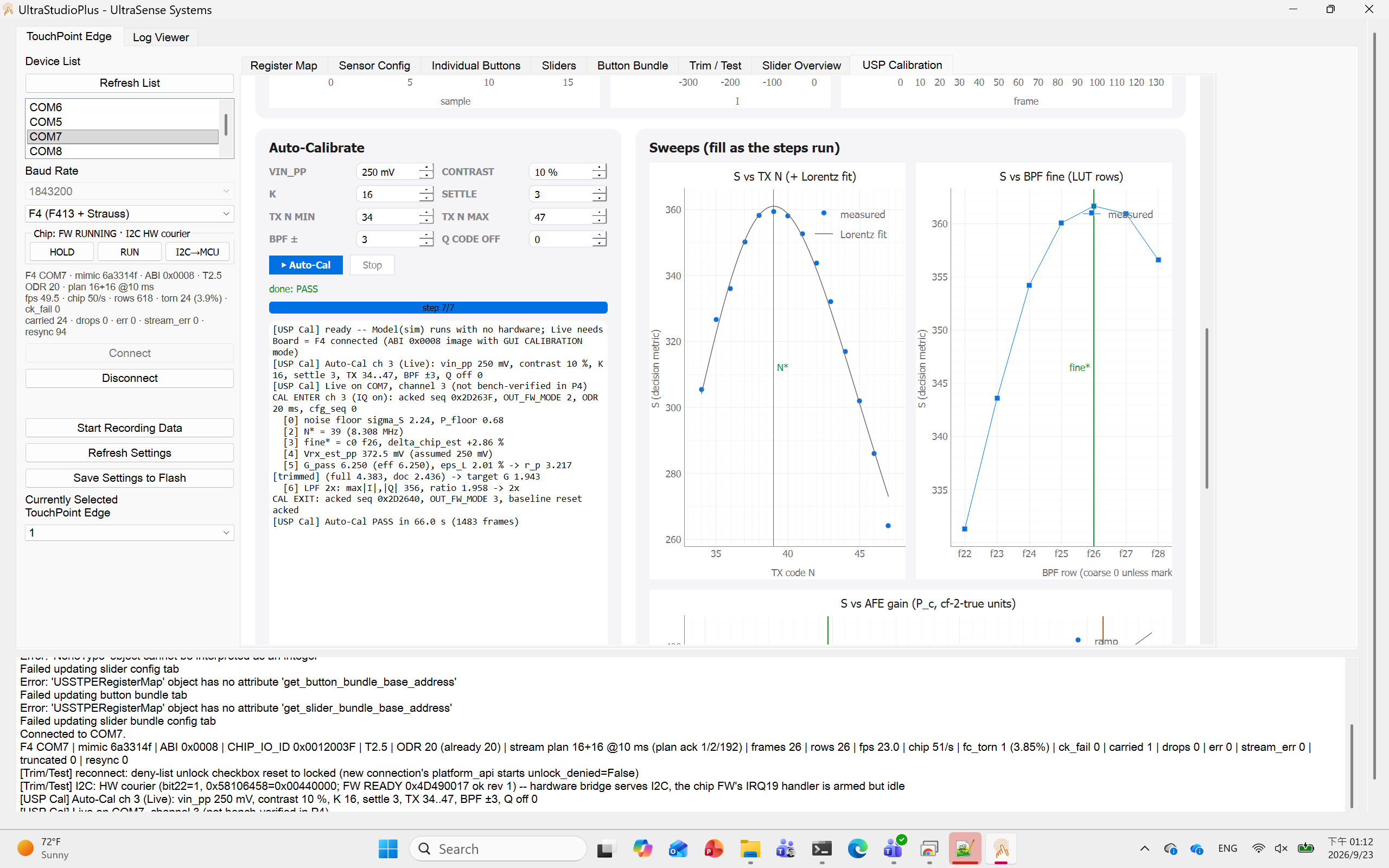
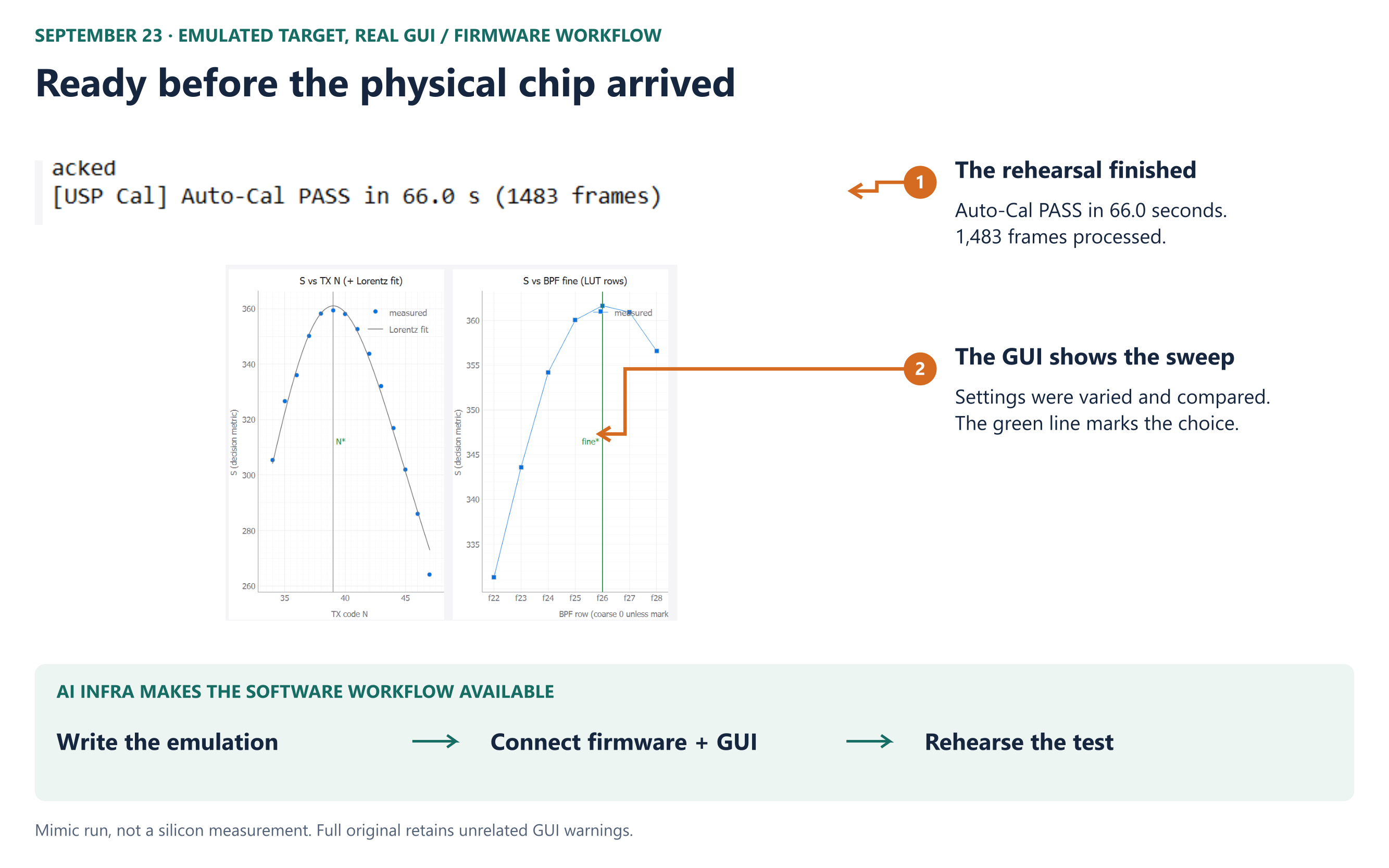
Original GUI capture · September 23 · F4 + L4 mimic, before silicon. The calibration pane reports PASS in 66.0 s over 1,483 frames. This is an emulation rehearsal; unrelated GUI warnings remain visible in the original capture.
Original GUI capture · September 23 · F4 + L4 mimic, before silicon. The calibration pane reports PASS in 66.0 s over 1,483 frames. This is an emulation rehearsal; unrelated GUI warnings remain visible in the original capture. Open supporting figure ↗
Explore the illustrated workflow and annotated evidence
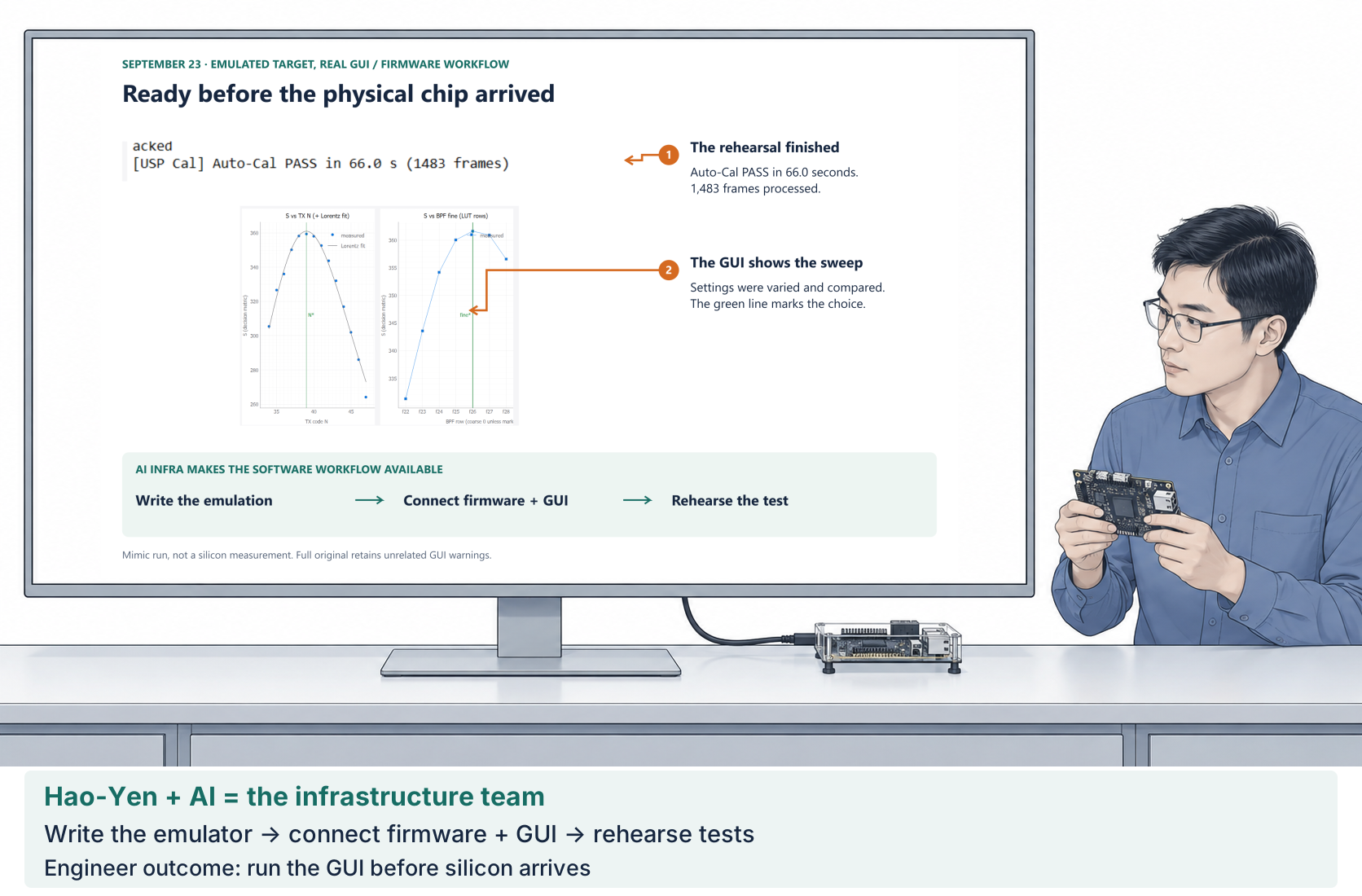
Real recorded evidence and enlarged annotations embedded in an illustrated screen. Engineer outcome: run the GUI before silicon arrives. Hao-Yen + AI: Write the emulator → connect firmware + GUI → rehearse tests
Recorded evidence in an illustrated scene. People and surroundings are illustrative.
Recorded evidence with result explanations
Enlarged excerpts with annotations. Open annotated view ↗

Run firmware on the day the chip arrives

The goal
Establish chip communication and load active firmware.
How AI helped
An analog designer used Claude and the prepared bench tools to resolve I²C communication issues and program the chip.
The result
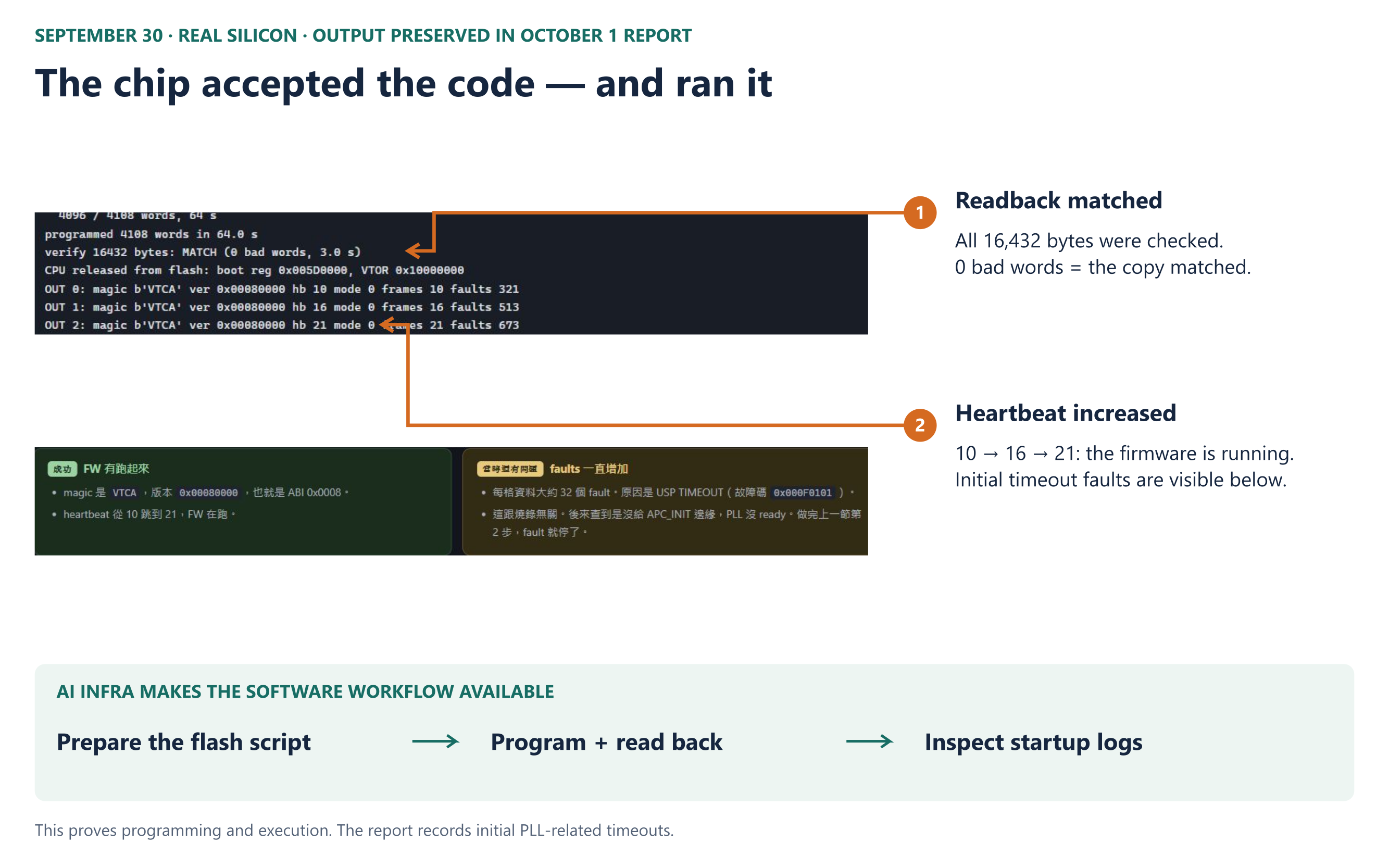
The team reported I²C communication, an oscillator readout and active firmware running on the day the QFN parts arrived.

The prepared tools let an analog designer carry out software bring-up at the bench.

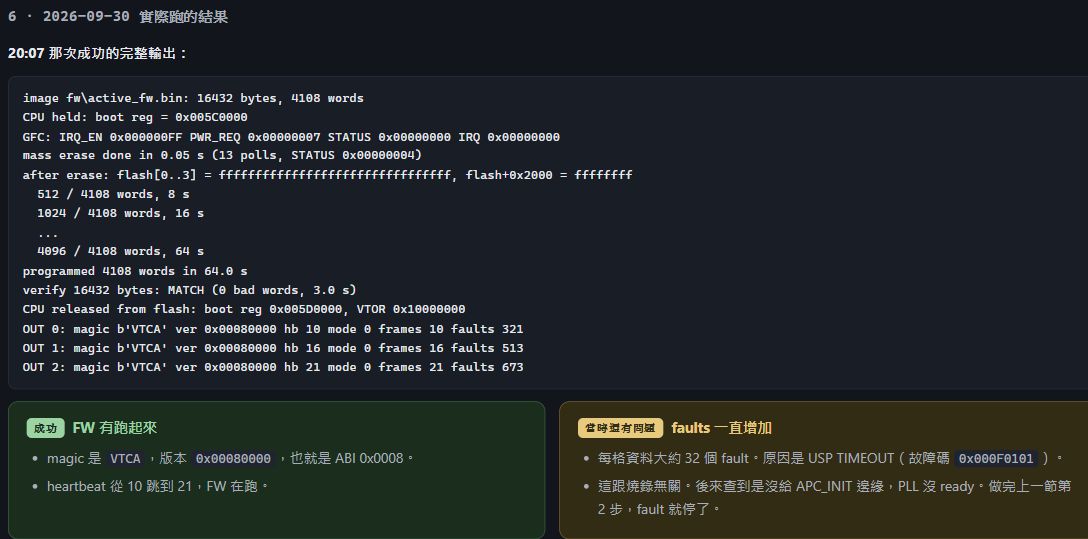
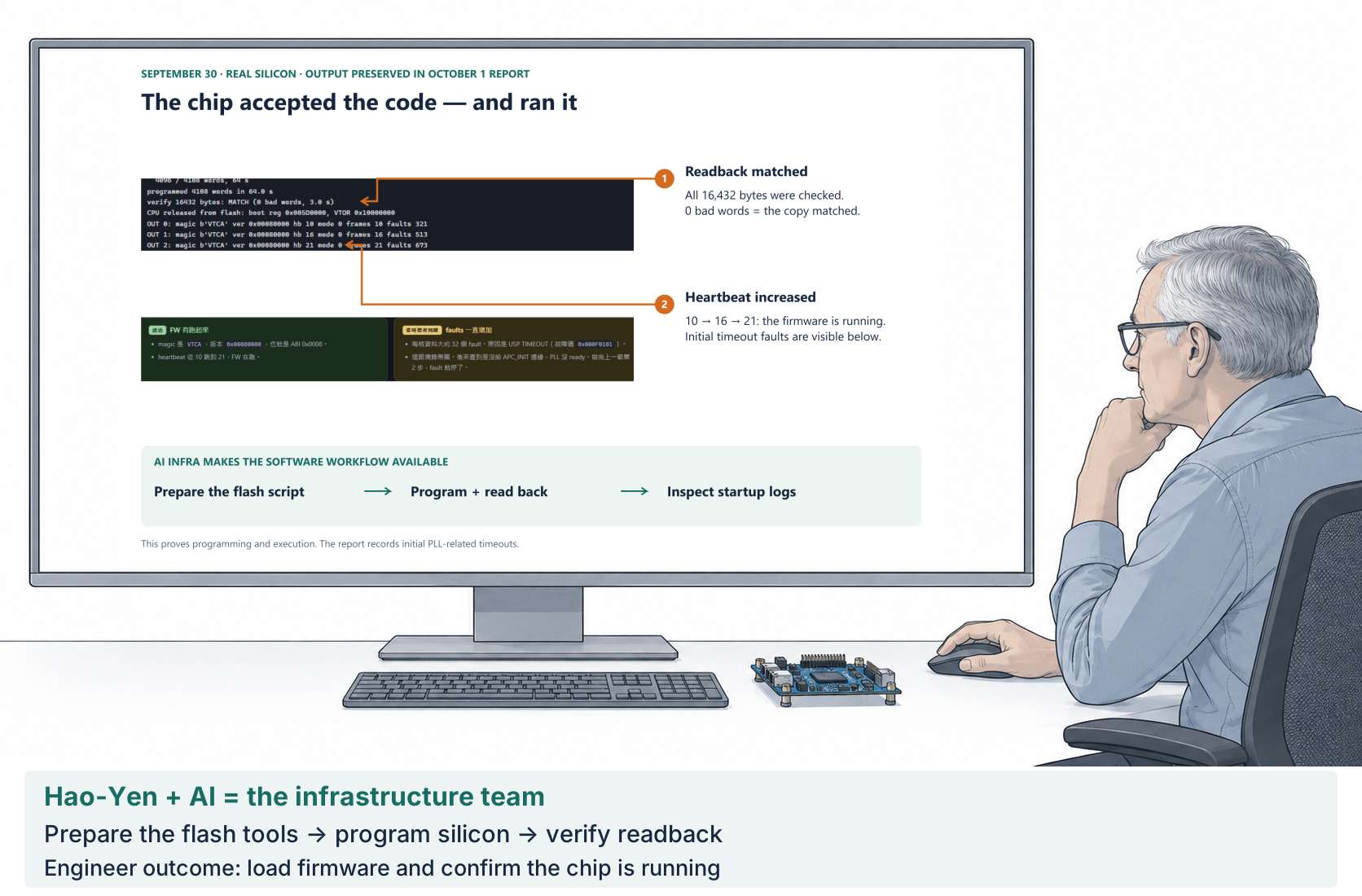
Original September 30 chip #1 output, preserved in the October 1 flash report. 16,432 bytes read back with 0 bad words; heartbeat advanced from 10 to 21. The capture also preserves the initial USP timeout faults and the report’s PLL-startup explanation.
Original September 30 chip #1 output, preserved in the October 1 flash report. 16,432 bytes read back with 0 bad words; heartbeat advanced from 10 to 21. The capture also preserves the initial USP timeout faults and the report’s PLL-startup explanation. Open supporting figure ↗
Explore the illustrated workflow and annotated evidence
Real recorded evidence and enlarged annotations embedded in an illustrated screen. Engineer outcome: load firmware and confirm the chip is running. Hao-Yen + AI: Prepare the flash tools → program silicon → verify readback
Recorded evidence in an illustrated scene. People and surroundings are illustrative.
Recorded evidence with result explanations
Enlarged excerpts with annotations. Open annotated view ↗

Turn press measurements into an algorithm comparison

The goal
Compare how well three methods separate a finger press from measurement noise.
How AI helped
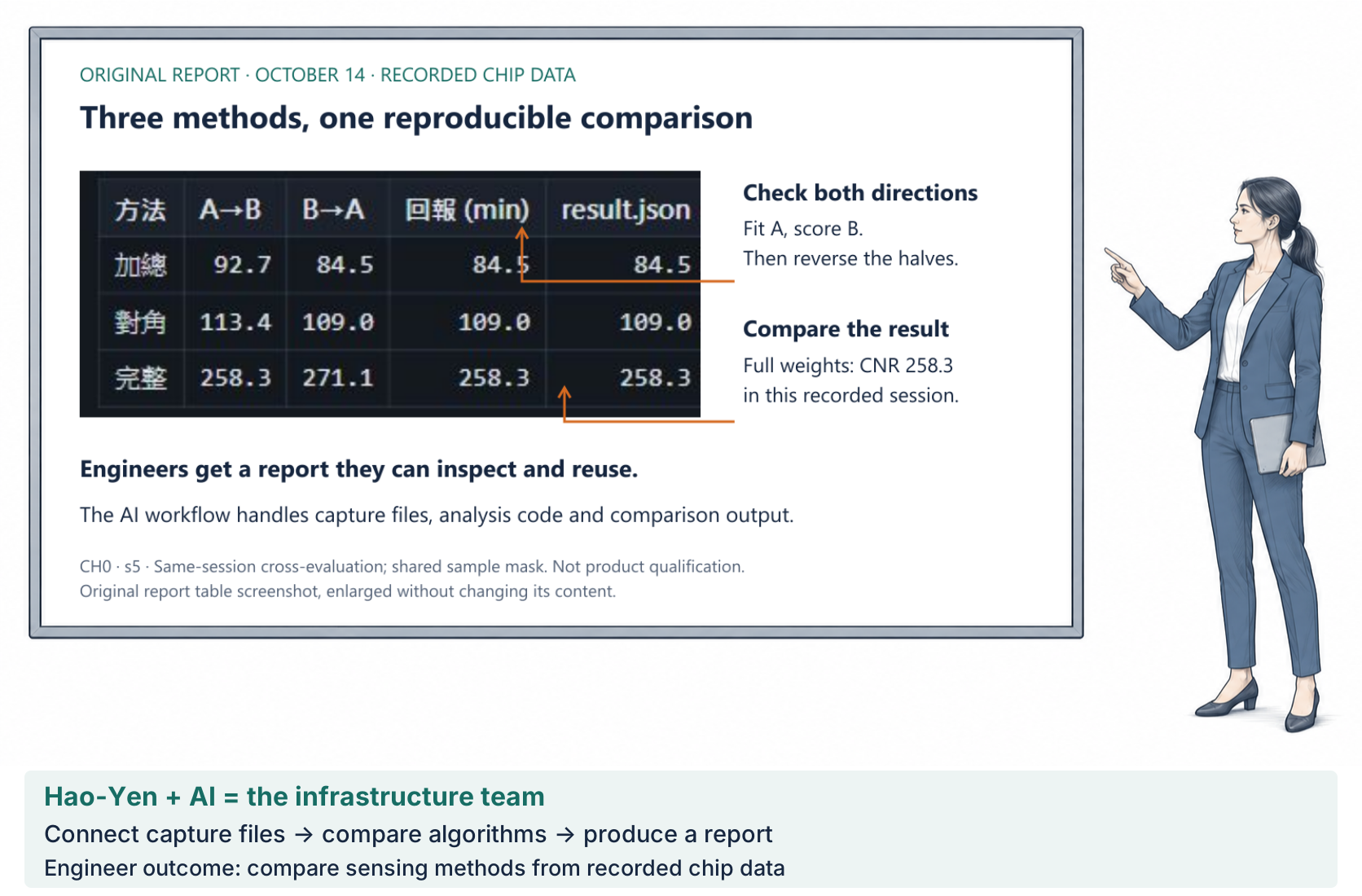
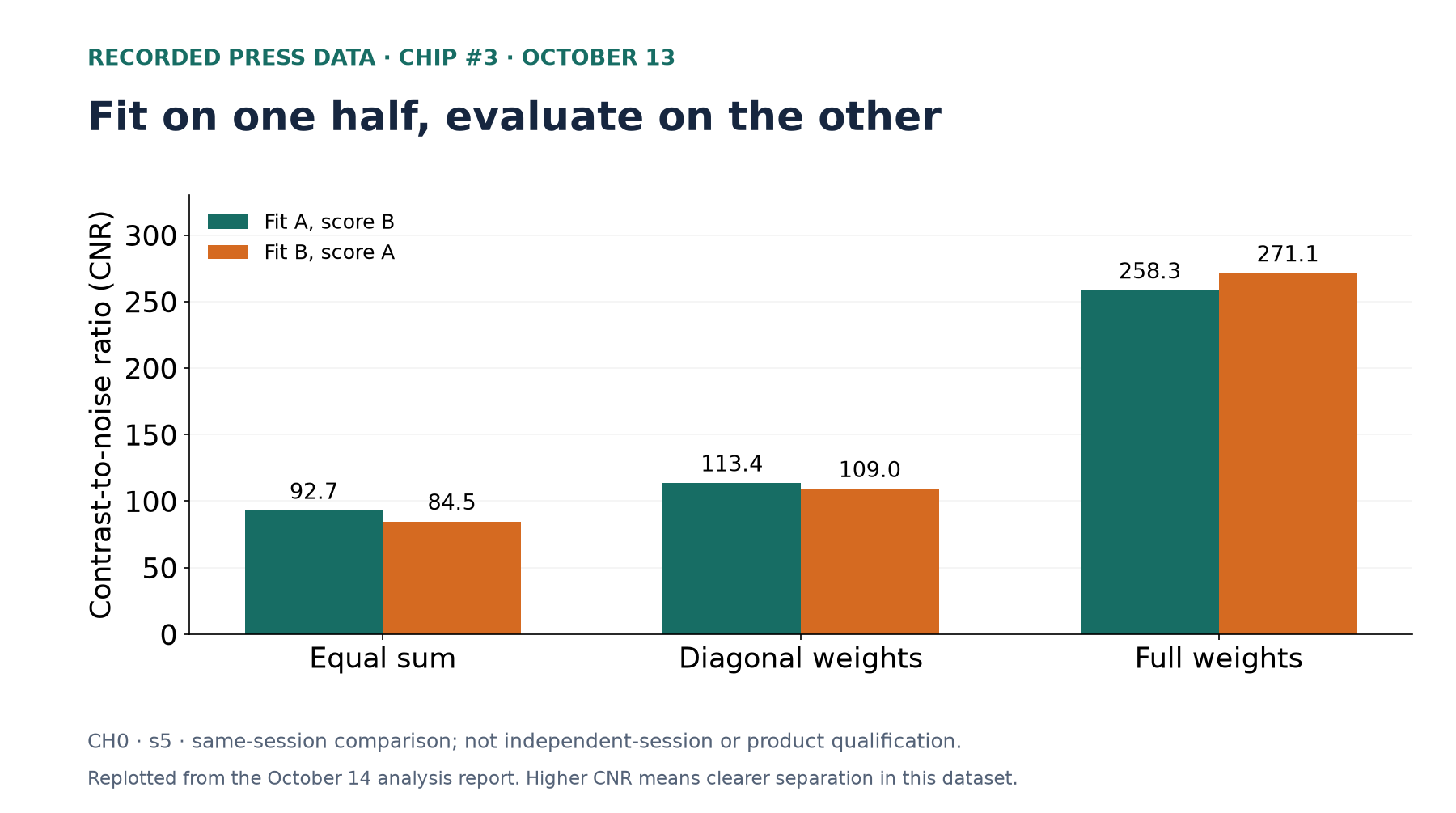
The environment connects chip context, recorded captures and analysis code. The report compares equal-sum, diagonal-weight and full-weight methods, fitting on one half of the session and scoring on the other.
The result
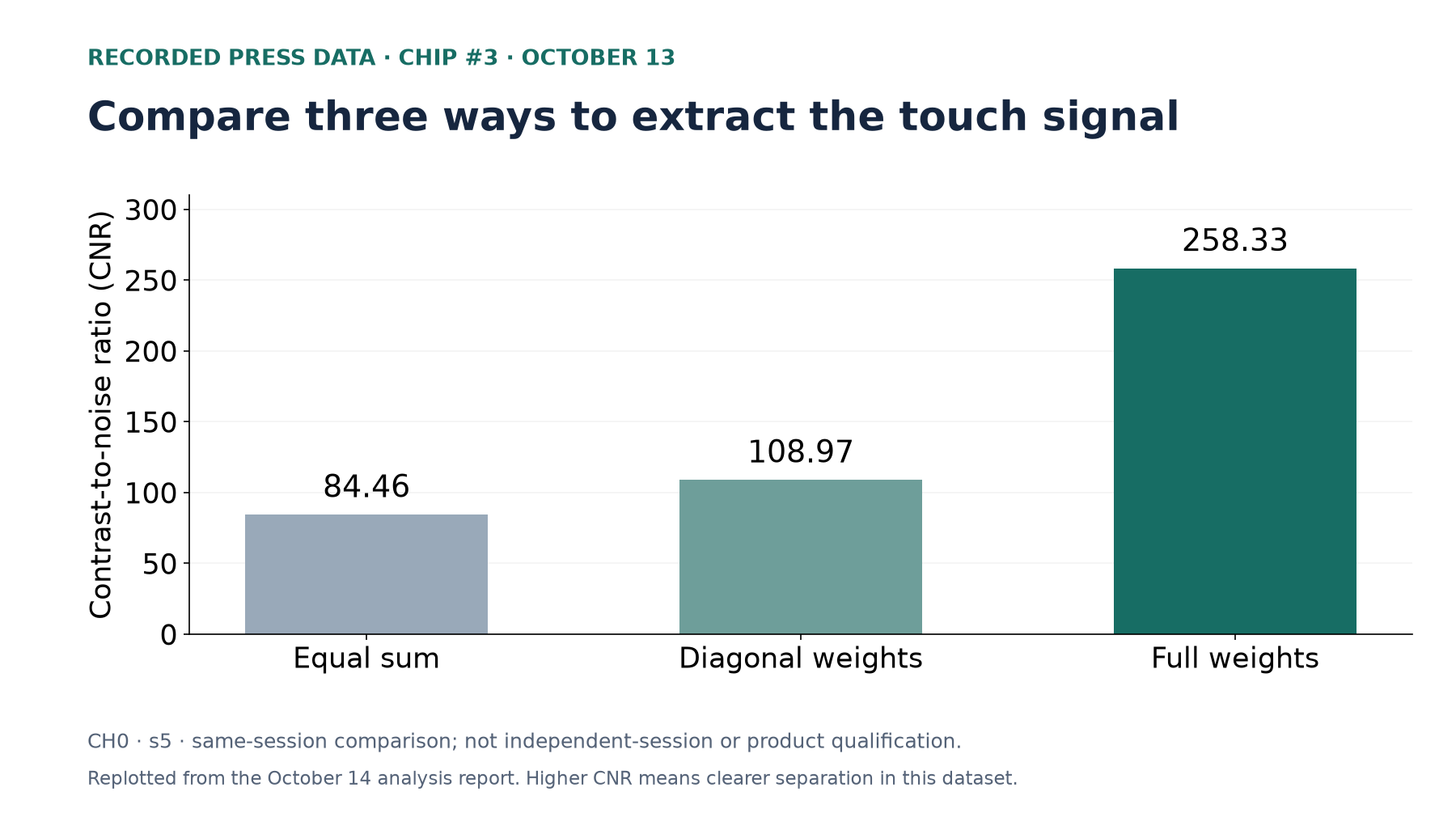
For chip #3, CH0 at s5, the reported CNR values are 84.46, 108.97 and 258.33. The comparison gives engineers a reproducible basis for choosing the next experiment.

Engineers can investigate a sensing question with analysis code and a report they can inspect and reuse.

Chart replotted from the October 14 analysis report: CH0 s5 CNR 84.46, 108.97 and 258.33.
Replotted report values, not a new measurement. October 13 chip #3, CH0, s5; the lower of two cross-evaluation directions. Both halves come from the same press session, and the sample mask uses both halves. This does not establish independent-session or product performance. Open supporting figure ↗
Explore the illustrated workflow and annotated evidence
Real recorded evidence and enlarged annotations embedded in an illustrated screen. Engineer outcome: compare sensing methods from recorded chip data. Hao-Yen + AI: Connect capture files → compare algorithms → produce a report
Recorded evidence in an illustrated scene. People and surroundings are illustrative.
Recorded evidence with result explanations
Two evaluation directions from the same recorded session. This view explains how the comparison was checked. Open annotated view ↗

Make calibration a repeatable chip test

The goal
Run automatic calibration across channels 0–7 and evaluate speed and errors.
How AI helped
Connected firmware and host tools let the team run calibration, collect data and compare settings in one environment.
The result
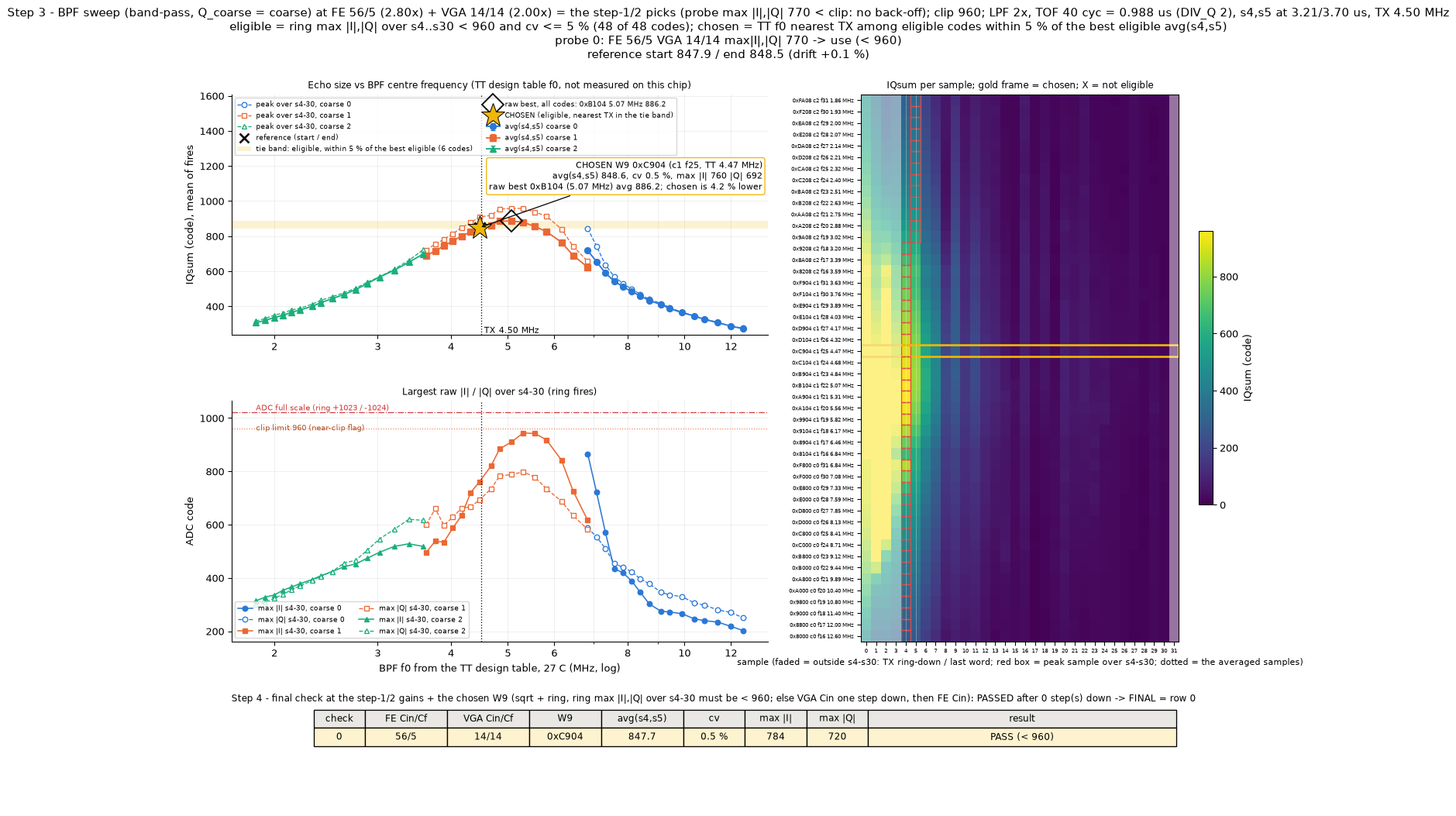
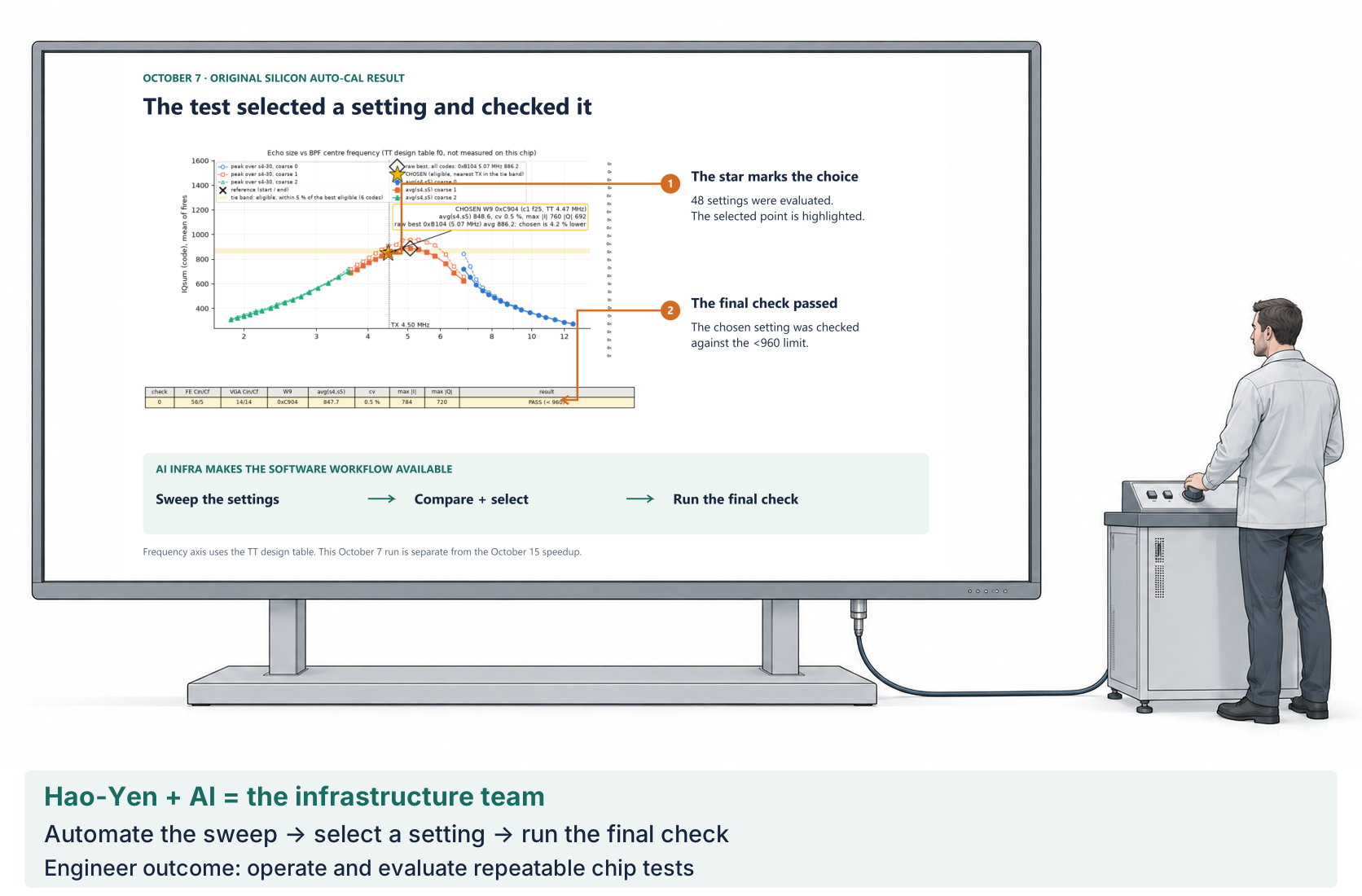
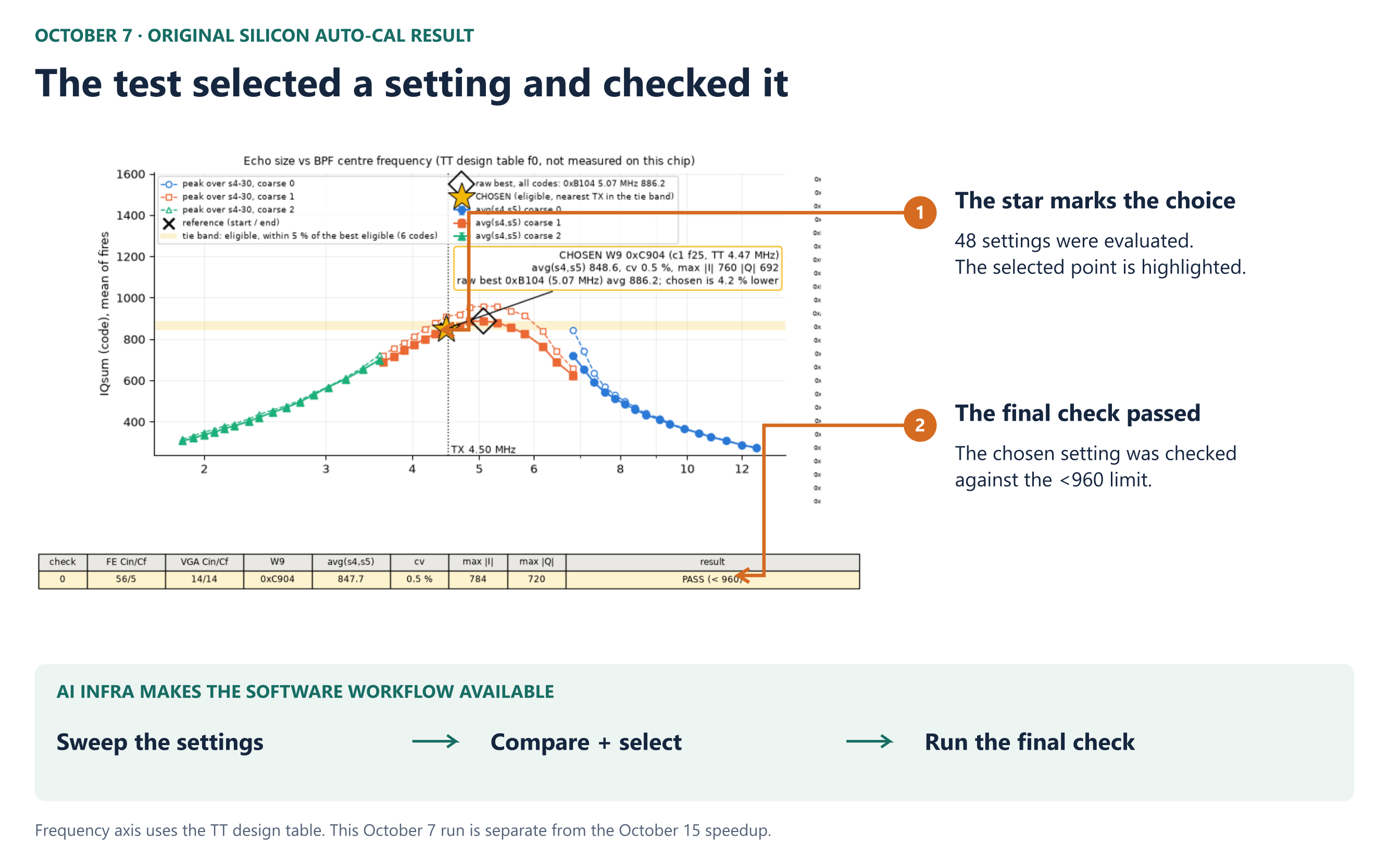
The October 15 report shows 5.7 s reduced to 1.84 s per point, with zero errors across 4,600 points. The illustration shows the separate October 7 sweep and final check.

Engineers can run and evaluate repeated chip tests through a reusable firmware and test interface.

Original auto-cal output · October 7, 16:01 run. The BPF sweep, sample heatmap and final-check table show the selected setting and PASS (<960). The frequency axis uses the design lookup table. The separate 5.7 s to 1.84 s speedup was reported on October 15; this figure is from the earlier run.
Original auto-cal output · October 7, 16:01 run. The BPF sweep, sample heatmap and final-check table show the selected setting and PASS (<960). The frequency axis uses the design lookup table. The separate 5.7 s to 1.84 s speedup was reported on October 15; this figure is from the earlier run. Open supporting figure ↗

Less waiting between calibration points.

5.7 seconds per point → 1.84 seconds per point

Approximately 3.1× faster for this calibration workflow

The October 14 report describes keeping the serial port open between operations. The October 15 follow-up reports 4,600 points with zero errors. These figures describe that workflow and reported run.

Timing and point count are from October 14–15 reports. The existing October 7 calibration image shows a separate run.

Explore the illustrated workflow and annotated evidence
Real recorded evidence and enlarged annotations embedded in an illustrated screen. Engineer outcome: operate and evaluate repeatable chip tests. Hao-Yen + AI: Automate the sweep → select a setting → run the final check
Recorded evidence in an illustrated scene. People and surroundings are illustrative.
Recorded evidence with result explanations
Enlarged excerpts with annotations. Open annotated view ↗

A colleague extended the tools for tactile testing.

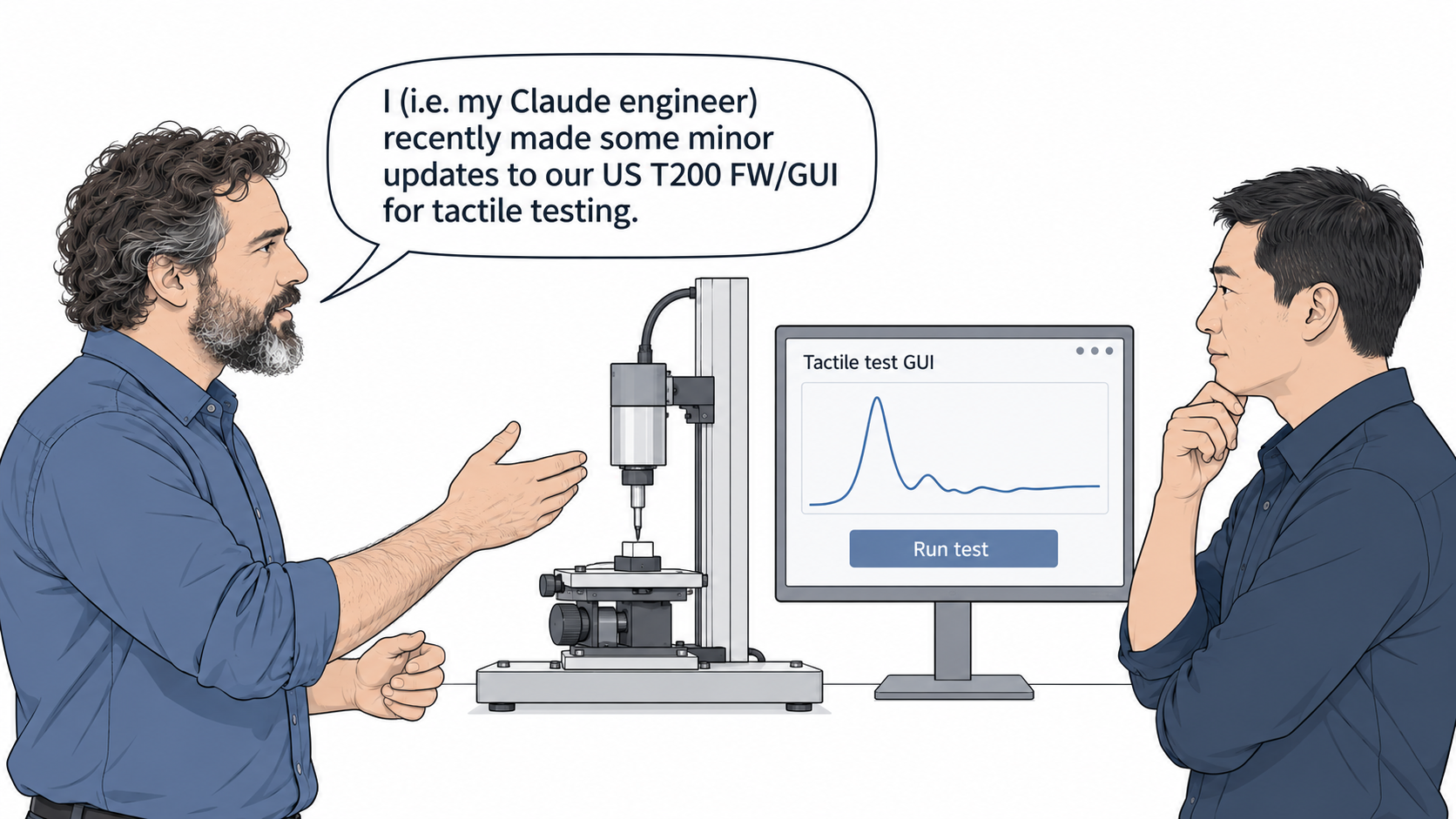
On October 13, 2026, a colleague reported using his own Claude environment to update T200 firmware and its GUI for tactile testing. He kept the setup for future work, extending the tools to fit his experiment.

Engineering team member · October 13, 2026

What the team reported

Engineers describe the work they carried out: chip communication, firmware programming, test-tool changes and calibration.

Excerpts from Teams and email, attributed by role and date. Chinese messages include English translations.

Program firmware from the analog bench

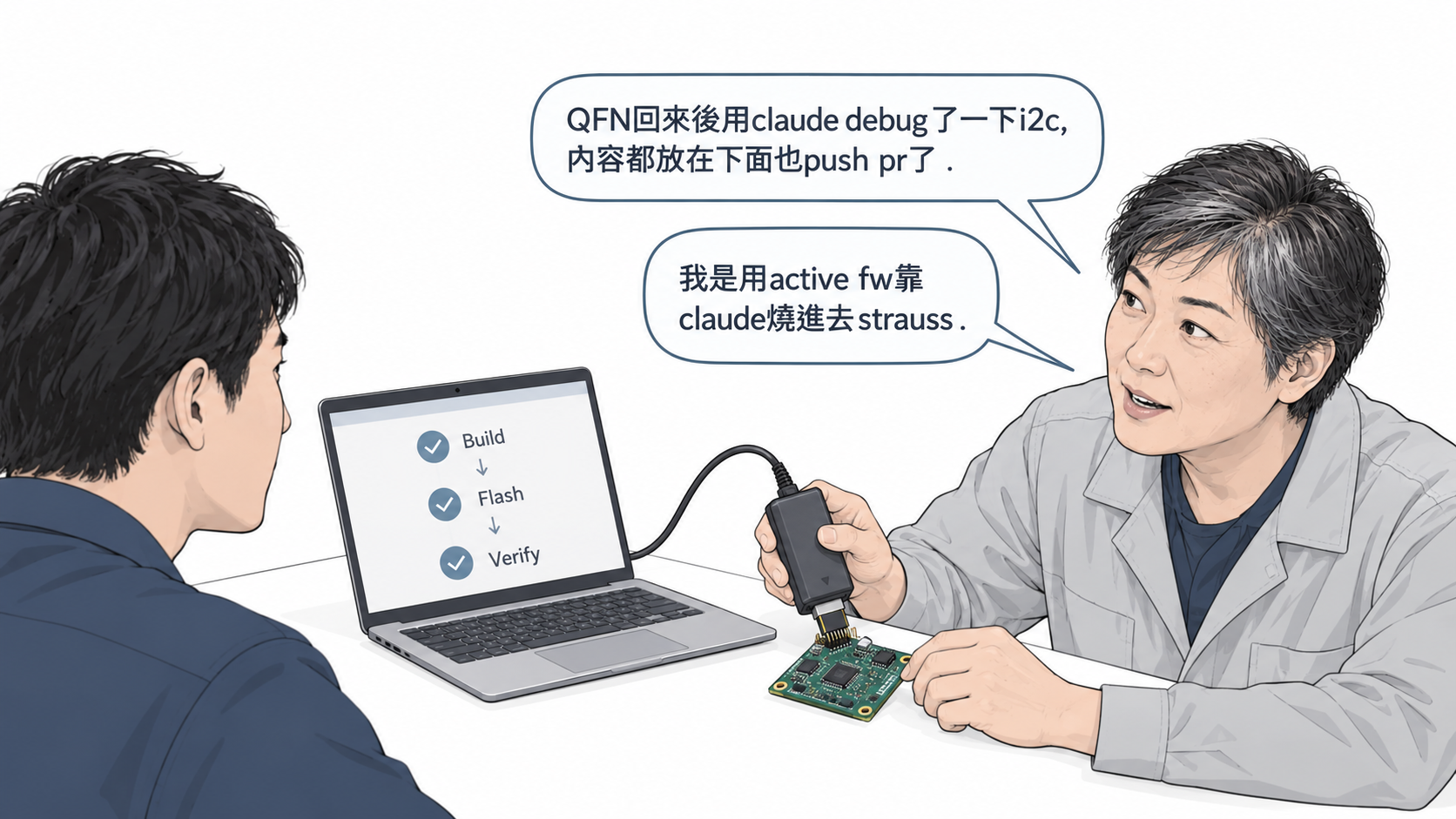
QFN回來後用claude debug了一下i2c, 內容都放在下面也push pr了

After the QFN chip arrived, I used Claude to debug I²C and pushed a pull request.

Analog IC designer · September 30, 2026

Teams excerpt describing an I²C fix submitted for review.

我是用active fw靠claude燒進去strauss

I used Claude to flash the active firmware into Strauss.

Analog IC designer · September 30, 2026

Teams excerpt confirming firmware programming. Auto-cal was still failing in this early bring-up report.

View an illustrated scene for this feedback
AI-generated fictional scene. Program firmware from the analog bench. QFN回來後用claude debug了一下i2c, 內容都放在下面也push pr了 我是用active fw靠claude燒進去strauss
Illustrated scene with verified feedback. People and screens are illustrative.

Make software work accessible

話說能引入 AI 把這些 flow 的難度降低到我們也能幫忙

大大真的是很猛呀...

Introducing AI lowered the difficulty of these workflows enough for us to contribute.

Analog IC designer · October 6, 2026

Two consecutive Teams messages. English translation of the first message.

View an illustrated scene for this feedback
AI-generated fictional scene. Make software work accessible. 話說能引入 AI 把這些 flow 的難度降低到我們也能幫忙
Illustrated scene with verified feedback. People and screens are illustrative.

Run calibration and share the data

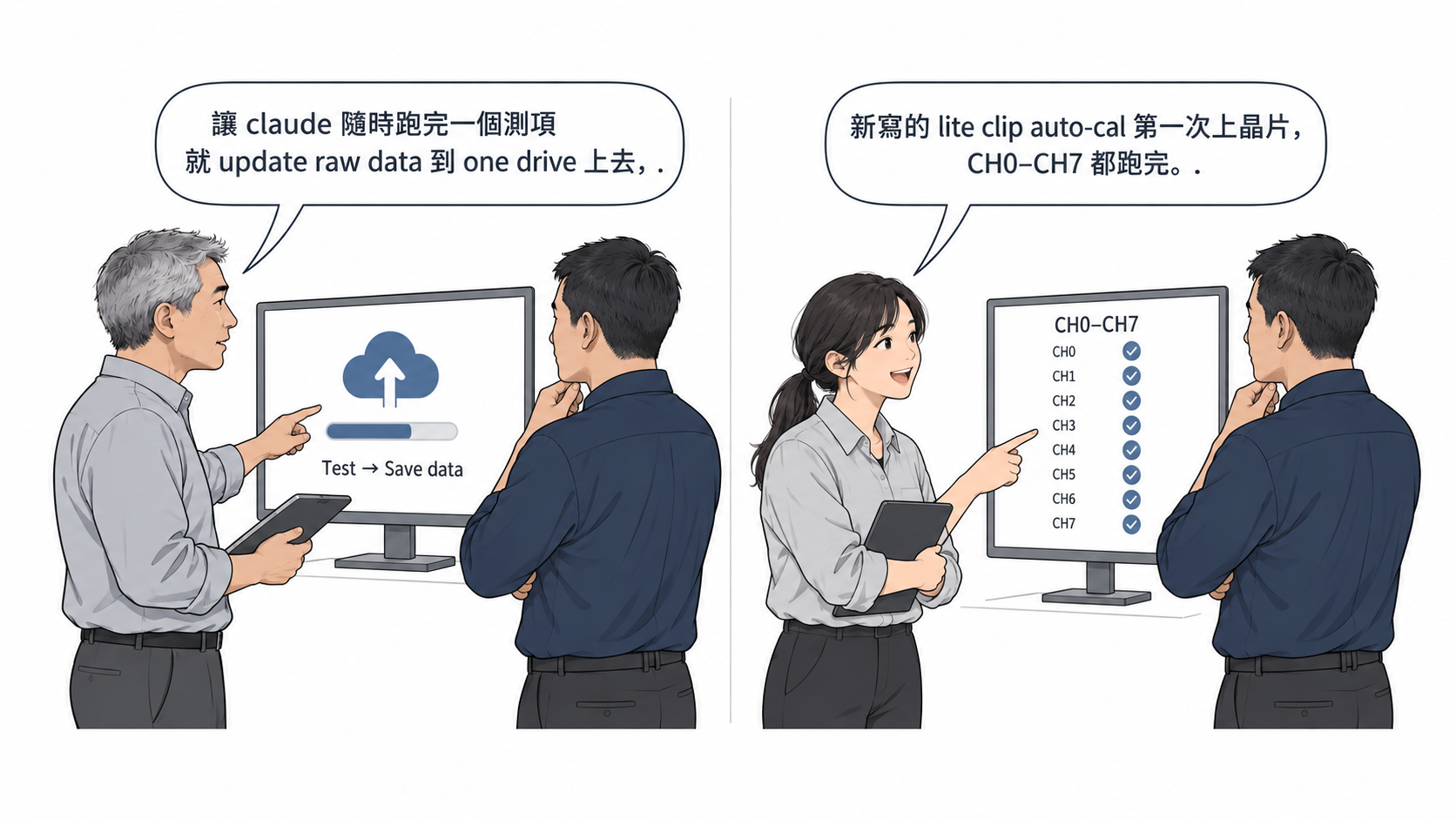
讓 claude 隨時跑完一個測項就 update raw data 到 one drive 上去,

Have Claude update the raw data on OneDrive whenever it finishes a test.

Analog IC designer · October 6, 2026

Overnight-test handover describing how raw data would be shared for review.

新寫的 lite clip auto-cal 第一次上晶片,CH0–CH7 都跑完。

The new lite clip auto-cal ran on silicon for the first time and completed CH0–CH7.

Analog IC designer · October 15, 2026

Excerpt from a bench progress report, under the stated test conditions.

View an illustrated scene for this feedback
AI-generated fictional scene. Run calibration and share the data. 讓 claude 隨時跑完一個測項就 update raw data 到 one drive 上去, 新寫的 lite clip auto-cal 第一次上晶片,CH0–CH7 都跑完。
Illustrated scene with verified feedback. People and screens are illustrative.

Adapt the software to the experiment

I (i.e. my Claude engineer) recently made some minor updates to our US T200 FW/GUI for tactile testing.

Engineering team member · October 13, 2026

Email excerpt describing firmware and GUI changes, with existing capabilities preserved and an environment the team could reuse.

View an illustrated scene for this feedback
AI-generated fictional scene. Adapt the software to the experiment. I (i.e. my Claude engineer) recently made some minor updates to our US T200 FW/GUI for tactile testing.
Illustrated scene with verified feedback. People and screens are illustrative.

Review the results together

The platform from Hao-yen's team is very impressive.

Greater China sales team member · October 8, 2026

Original email wording. The illustrated dialogue shortens “Hao-yen’s team” to “Hao-Yen”; the infrastructure team is Hao-Yen + AI. The report also identified performance gaps and further measurements.

View an illustrated scene for this feedback
AI-generated fictional scene. Review the results together. The platform from Hao-yen's team is very impressive.Original October 7 calibration output, embedded unchanged in the illustrated projection screen
Original October 7 calibration result in an illustrated scene. Dialogue adapted from “Hao-yen’s team”; the original excerpt appears above.

Put AI to work in your hardware team.

Through Ponchi AI, I help hardware teams bring AI into a useful engineering workflow: connect the knowledge and tools, test the result in real work, and leave the team with something it can keep using.

Discuss your engineering workflowBack to my story