
Our lab now runs like a multi-core chip
10 benches, 10 AI agents, all running in parallel and all sharing one knowledge base: the chip's digital twin plus everything the team has learned.
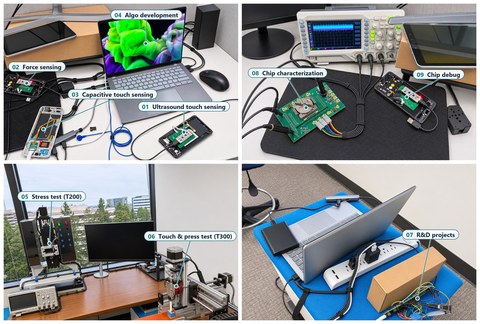
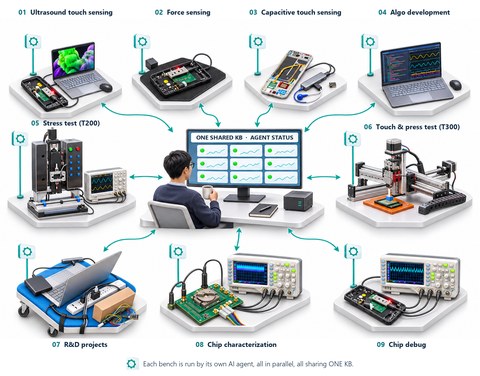
Our lab now runs like a multi-core chip: 10 benches, 10 AI agents, all running in parallel.
Yesterday I shared how our most complicated chip took 1/10 of the time to bring up. This is what that looks like on the bench.
Ultrasound touch sensing, force sensing, capacitive touch sensing, algo development, chip characterization, chip debug and a couple of R&D projects. Plus our two force testers, T200 grinding through stress tests and T300 running touch-and-press tests around the clock.
Every bench is driven by its own AI agent. The agent picks up the task, runs the bench, reads the data, fixes what's broken and reports back. I just watch the dashboard.
The key is still the KB. All 10 agents share ONE KB -- the chip's digital twin + everything we've learned so far. So when the debug agent finds something, the force-test agent already knows it. Used to be a week of emails and meetings. Now it just happens.
A small team, running like a team 10x its size.
And yes, I'm still having my coffee.