One product brief — ultrasound eyes for robots — becomes a nine-sensor carrier PCB, a matching enclosure, FPGA transport RTL and a 3D host viewer. Three physical sensors stream real echoes at 400 kHz.
Draw
Your spec, sketch or brief becomes precise instructions and acceptance checks.
Build
EchoMind's five agents develop electronics, mechanics, firmware, FPGA and integration in parallel from shared product knowledge.
Real
Hardware, code and test records — plus a product digital twin your own team and agents can query.
Five AI agents - electronics, mechanics, firmware, FPGA and integration - built EchoMind in parallel in about two days, on a tenth of my engineering time. They worked from our knowledge base. I set the brief, directed the work and reviewed the results.
One brief. AI carries the work across disciplines.
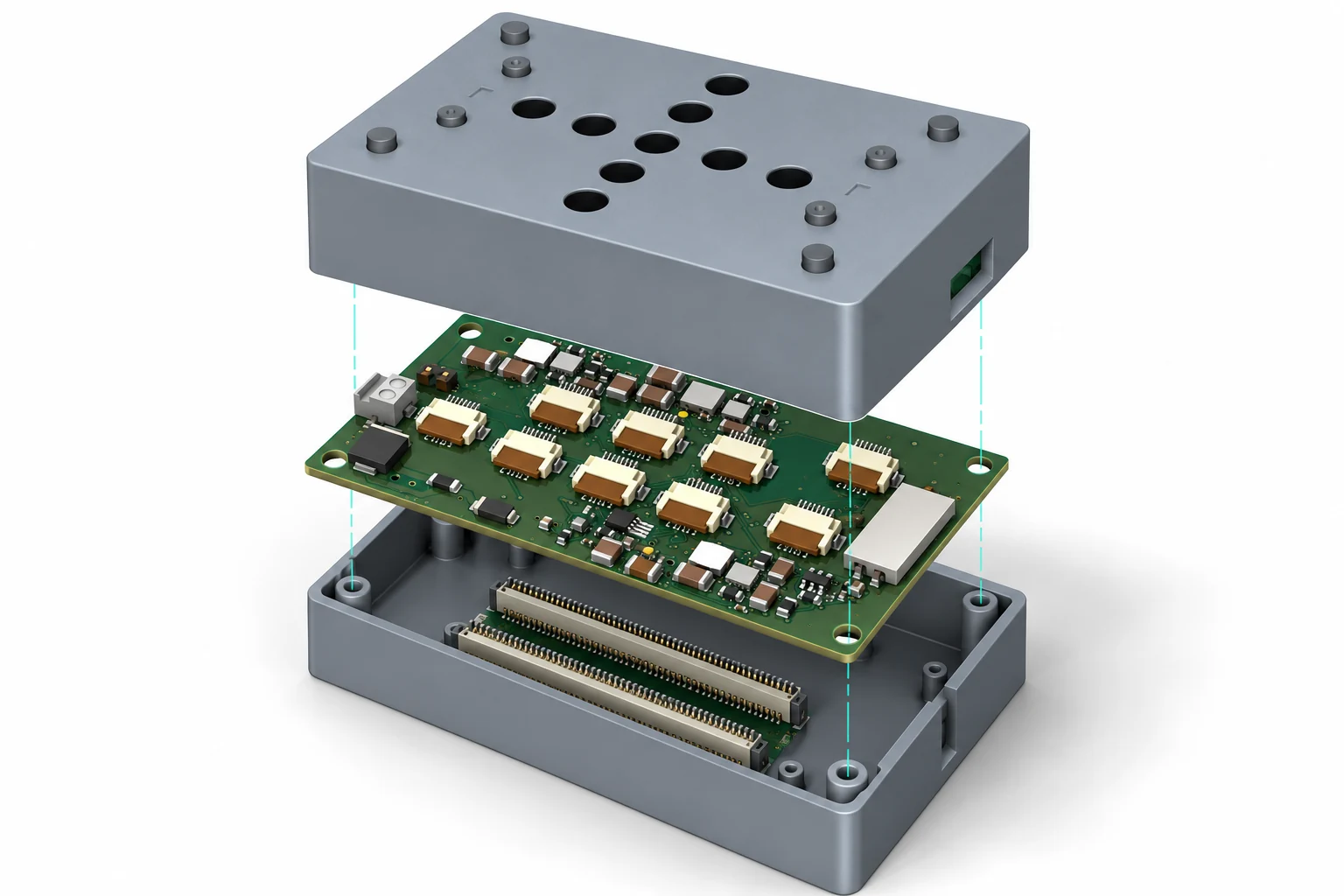
The value is in the connected work. A sensor layout becomes PCB geometry, that geometry informs the enclosure, and the interfaces carry through into FPGA logic and host software. AI creates and revises the engineering files across those boundaries.
Human direction
Hao-Yen defines the sensing task, constraints and acceptance criteria.
AI execution
AI agents develop the designs and code, run software checks and revise the work from results.
Human review
Hao-Yen reviews the outputs and test evidence, then sets the next iteration.
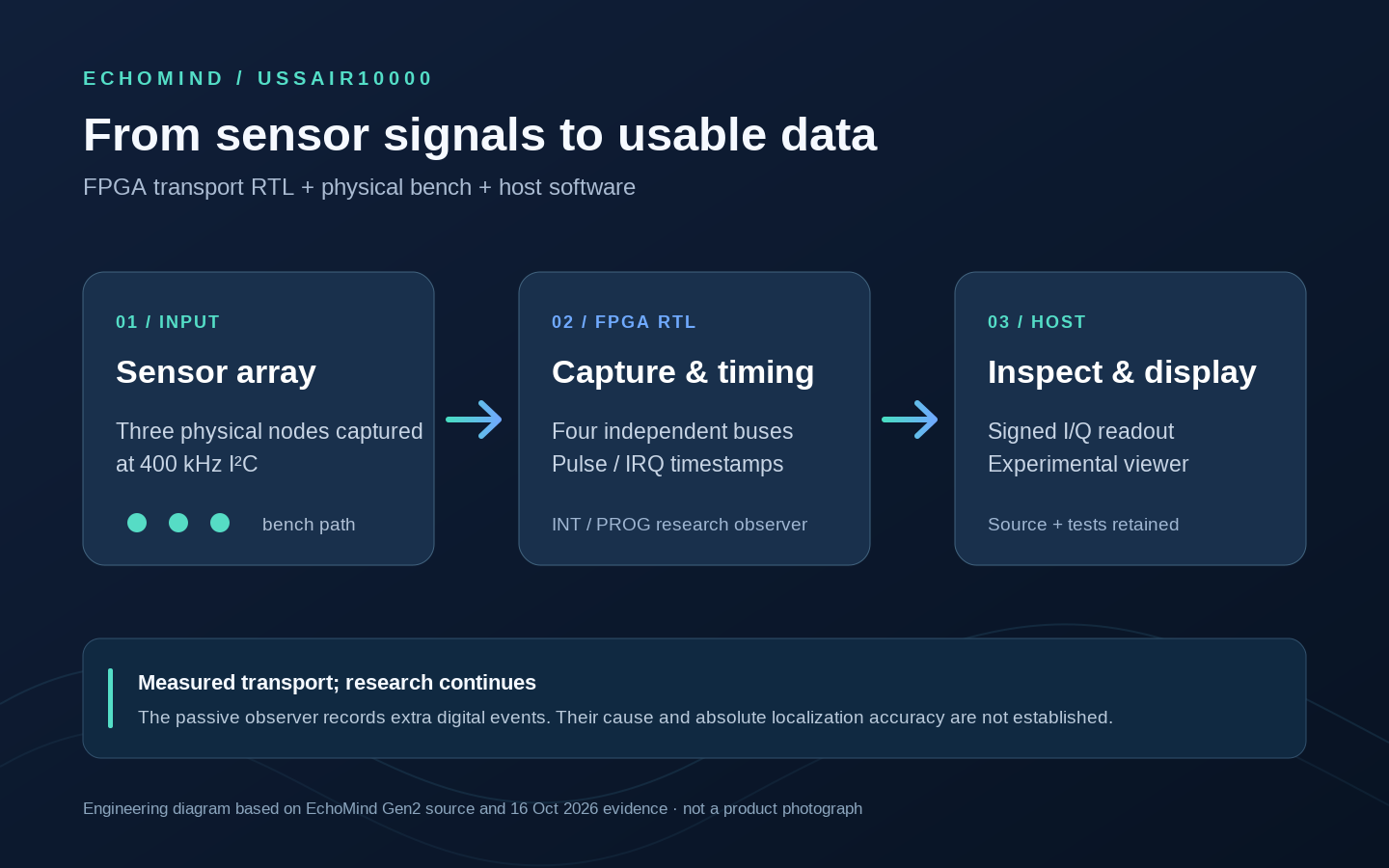
Sensor protocols, timing and the data path to the host.
AI execution
Implemented RTL and host capture and viewing software, including timestamps and signed I/Q transport.
Reviewable output
The transport design connects four buses. Host software captures signals from three physical sensors.
What this makes possible
One person can direct development across electronics, mechanics and software, with AI doing the implementation and iteration. The handoff is editable designs, source code and verification records that can be inspected and continued.
EchoMind shows how the ultrasonic air-sensor brief becomes a native PCB, a compact enclosure, FPGA transport RTL and host software. The nine-sensor array brings nine sensors into a PCB and enclosure CAD assembly. The three-sensor FPGA bench captures real echoes.
Ultrasonic air sensingNine-sensor array CADThree-sensor FPGA bench
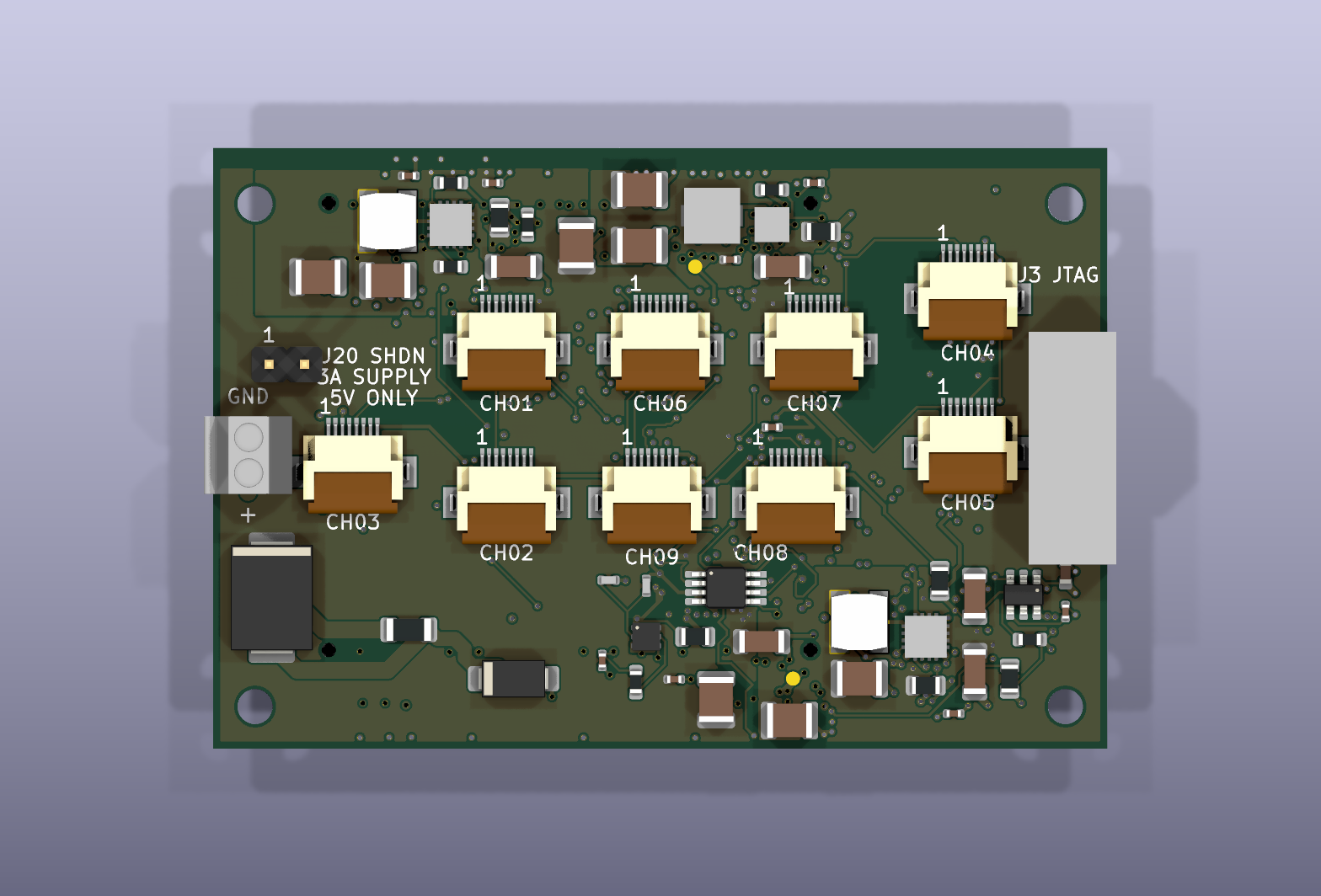
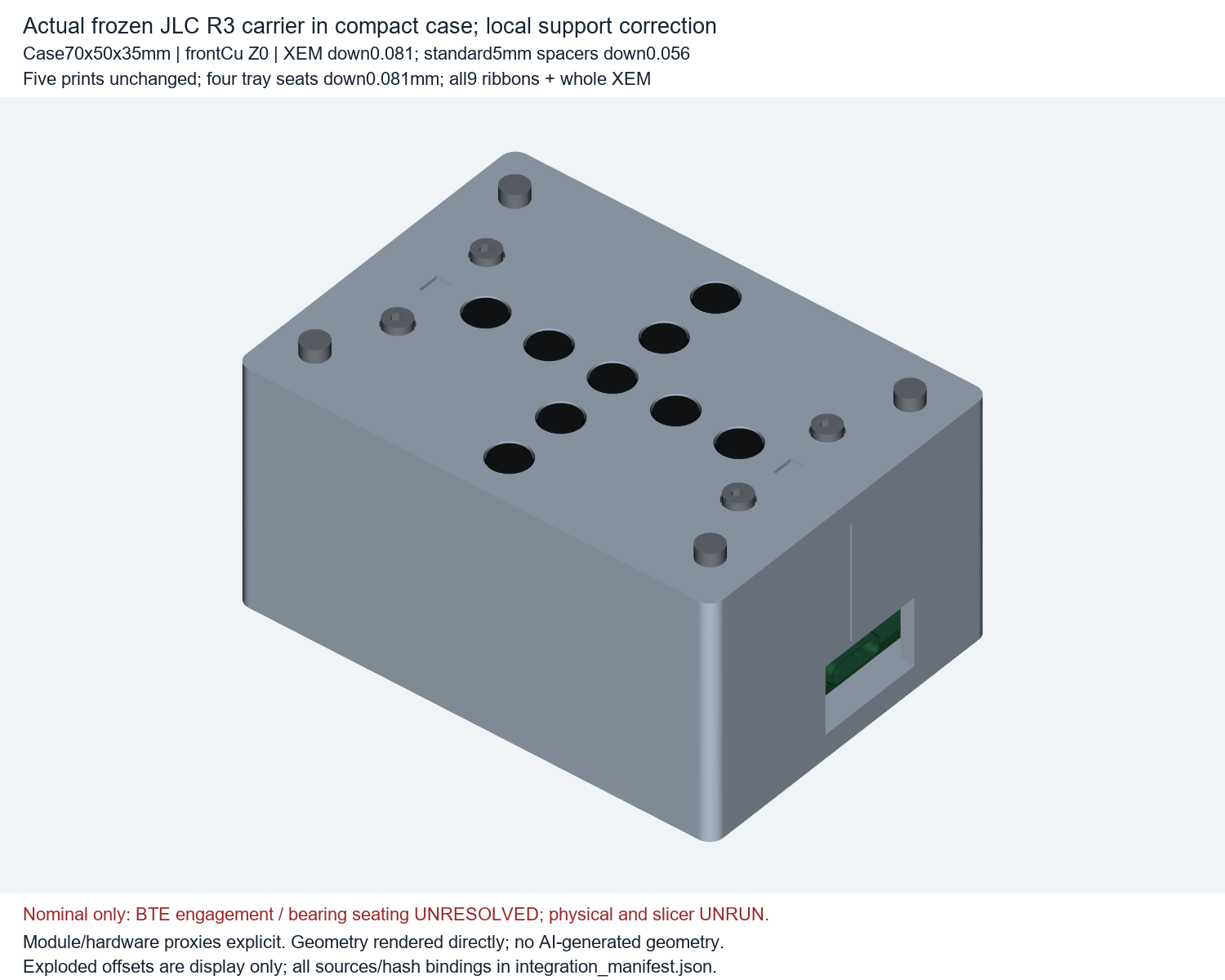
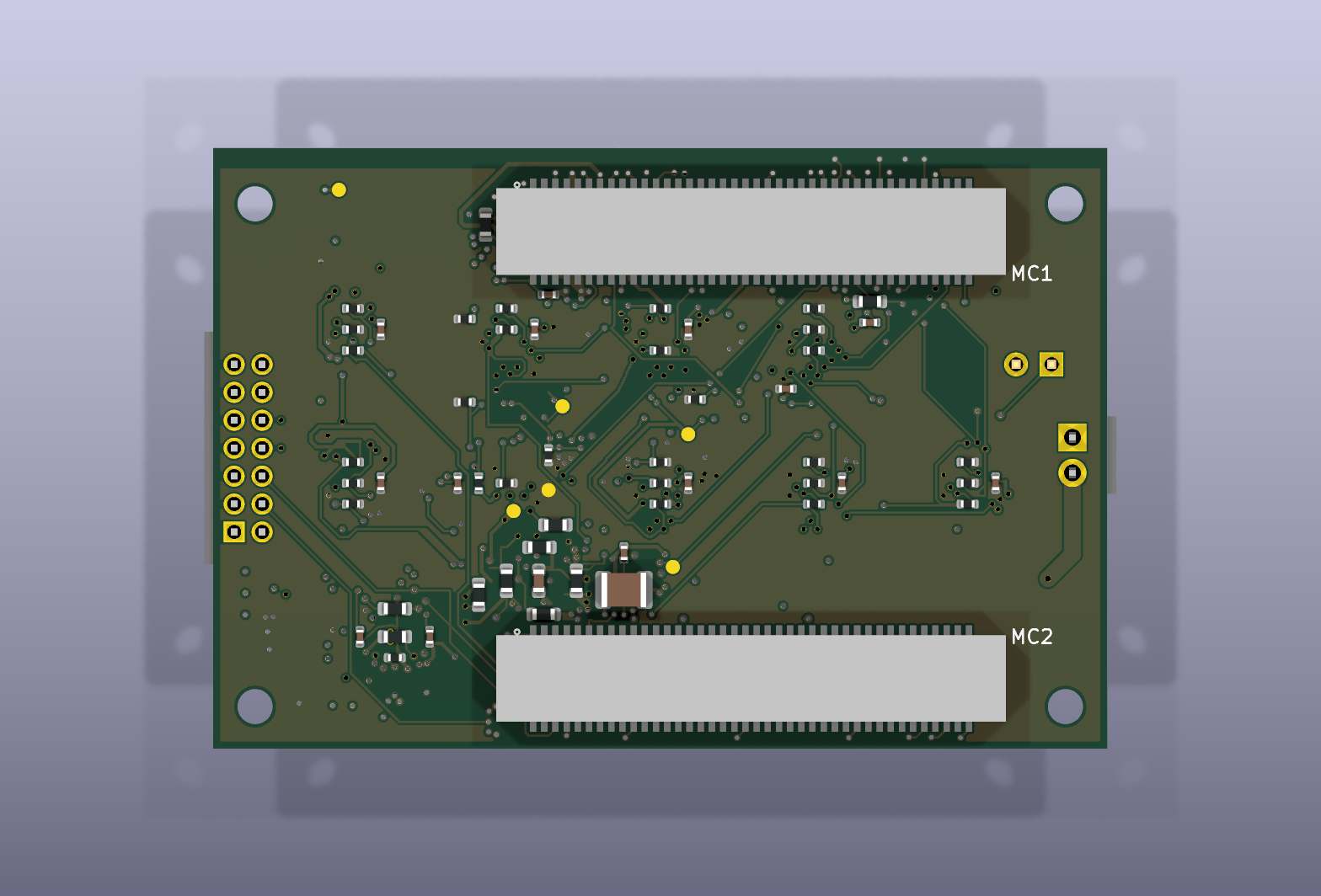
Nine-sensor PCB top↗R3 native 3D PCB export · nine sensor connectorsNine-sensor PCB underside↗R3 native 3D PCB export · FPGA module connectorsClosed enclosure CAD↗Nine-sensor array · enclosure CAD with nine acoustic openingsFPGA and RTL path↗Ultrasonic air sensing · three-sensor bench and research observer
Explore the design flow+
The product brief
Multi-node ultrasound sensing, a USB data interface and a 3D viewer are the shared product requirements.
Capture ultrasound echoes
Define sensor geometry
Show the scene in 3D
01ELECTRONICS
Schematic → PCB
Nine sensor interfaces, power and a direct FPGA connection become a native carrier PCB design.
Nine-sensor array · native PCB top view
02MECHANICAL
Sensor geometry → CAD
The native board outline and nine acoustic openings inform a compact enclosure CAD assembly.